

What does a full property refurbishment service actually include?
A full property refurbishment service covers every layer of a home, from the structural framework right through to final decorative touches. It includes planning, demolition, system upgrades, layout changes, kitchen and bathroom installations, insulation, joinery, flooring, painting, and full regulatory compliance. To count as full-service, the work must also be coordinated under project management with clear trade scheduling and end-to-end oversight.
Pro Tip: Always confirm what’s included in a “full refurbishment” before signing a contract. Scope gaps are a common source of budget overruns.
Petru Balbaie - Director at Compact Building Ltd
What a Full Property Refurbishment Really Covers
Refurbishment goes beyond surface updates. It involves stripping the property back and rebuilding the systems that make it function well. That means rewiring, plumbing, heating, layout changes, and damp-proofing.
This type of renovation touches every part of the property. Old infrastructure is replaced. Spaces are rethought to suit how people live now. Insulation is improved. Heating and electrics are brought up to modern standards. The result is not just visual; it’s functional and futureproof.
In a city like London, where homes vary and regulations are strict, clarity on what’s included is important. Most providers work within a structured model: plan, strip out, rebuild, and finish. Everything is done in sequence as part of one integrated process.
A Clear Definition of “Full Service” Refurbishment
A full-service refurbishment means one team manages everything. That includes the surveys, permissions, drawings, system upgrades, trade schedules, and compliance sign-offs.
Instead of hiring each trade separately and managing the process yourself, you deal with a single contractor responsible for delivery. They handle all the logistics, from electrical certification to Gas Safe checks, and ensure each part fits into a single timeline.
Not all builders use the term accurately. Real full-service refurbishment includes accountability for coordination and outcome, not just the visible work.
How the Planning Stage Shapes the Entire Project
Planning sets the tone for everything that follows. It starts with site visits, assessments, and feasibility checks. Layouts are developed. Structural constraints are explored. Programmes are built around what’s realistic for the space.
This phase helps reduce risk. It prevents late-stage changes, keeps budgets on track, and ensures permissions are secured in time. For London homes, it can also account for access limitations or leasehold rules that might affect the order of works. It also establishes scope definition and sets expectations for what a managed experience should feel like.
Cost Structuring and Budgeting in Full Refurbishment Projects
Knowing how a refurbishment is priced helps you make better decisions. Costs usually include labour, materials, design input, and any access-related premiums.
You’ll also see:
- Allowances for finishes or appliances
- Separate design or planning fees
- A contingency sum, usually 10–15% for unknowns
Payments tend to follow milestones. You might pay a deposit, then staged amounts at points like completion of first fix, second fix, and final decoration. A clear structure helps avoid confusion later.
Pro Tip: If you live in London, check whether your property is in a conservation area before starting work. This can affect what structural changes are allowed.
Petru Balbaie - Director at Compact Building Ltd
What Happens During the Strip-Out and Preparation Phase
Once the project is ready to begin, the strip-out clears away everything that’s no longer needed. Walls may be removed. Old systems are taken out. Floor coverings and ceilings come down if needed.
This is where hidden problems are often found. Damp issues, structural wear, or old wiring behind plaster are common. The aim is to expose everything early so fixes can be planned properly.
The preparation phase also includes setting up site safety, organising waste disposal, and marking out the new layout.
Structural Changes and Layout Improvements Included in the Service
Changing the internal structure reshapes how the home works. This can include removing walls, widening openings, or moving doors to improve flow.
In London homes, Building Control approval is often needed before works can begin. You might also need a structural engineer and a Party Wall agreement.
These changes are not just visual. They improve how the space feels and functions. You end up with rooms that connect better and layouts that make sense for modern life.
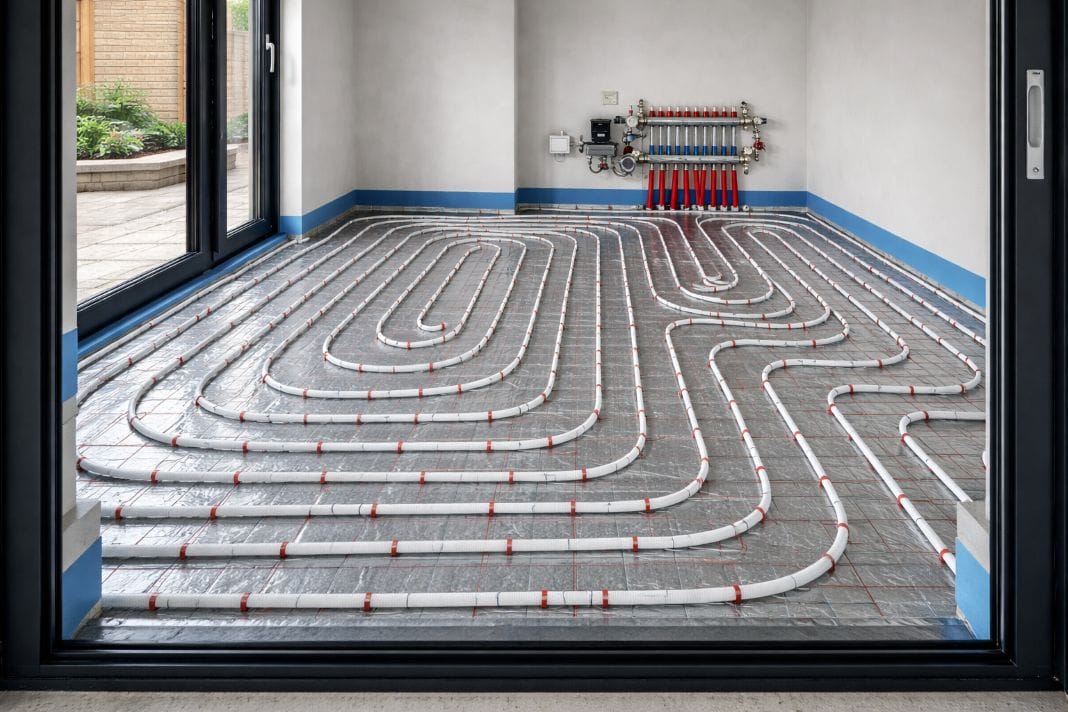
Upgrading the Essential Systems: Electrics, Plumbing and Heating
Old systems are replaced with safe, efficient ones. That usually means:
- Full rewiring
- New pipework for hot and cold water
- Heating upgrades like new radiators or a boiler swap
These upgrades are done early in the programme, before finishes are added. At this stage, your sockets, light points, and plumbing runs are all installed.
All of it is carried out by certified professionals and signed off with the right documentation. This first fix work lays the foundation for reliable systems long after the project ends.
What’s Involved in a New Kitchen as Part of a Full Refurbishment
Kitchens are high-spec areas. They involve plumbing, electrics, extraction, cabinetry, and finishes, all in a tight space.
Your contractor will coordinate the removal of the old kitchen, changes to pipework and wiring, ventilation setup, cabinet installation, and appliance fit-out. The key is sequencing:
- Flooring first
- Base units
- Worktops
- Appliances
It’s a compact choreography, especially in smaller homes. Getting it right ensures the whole refurbishment flows without bottlenecks.
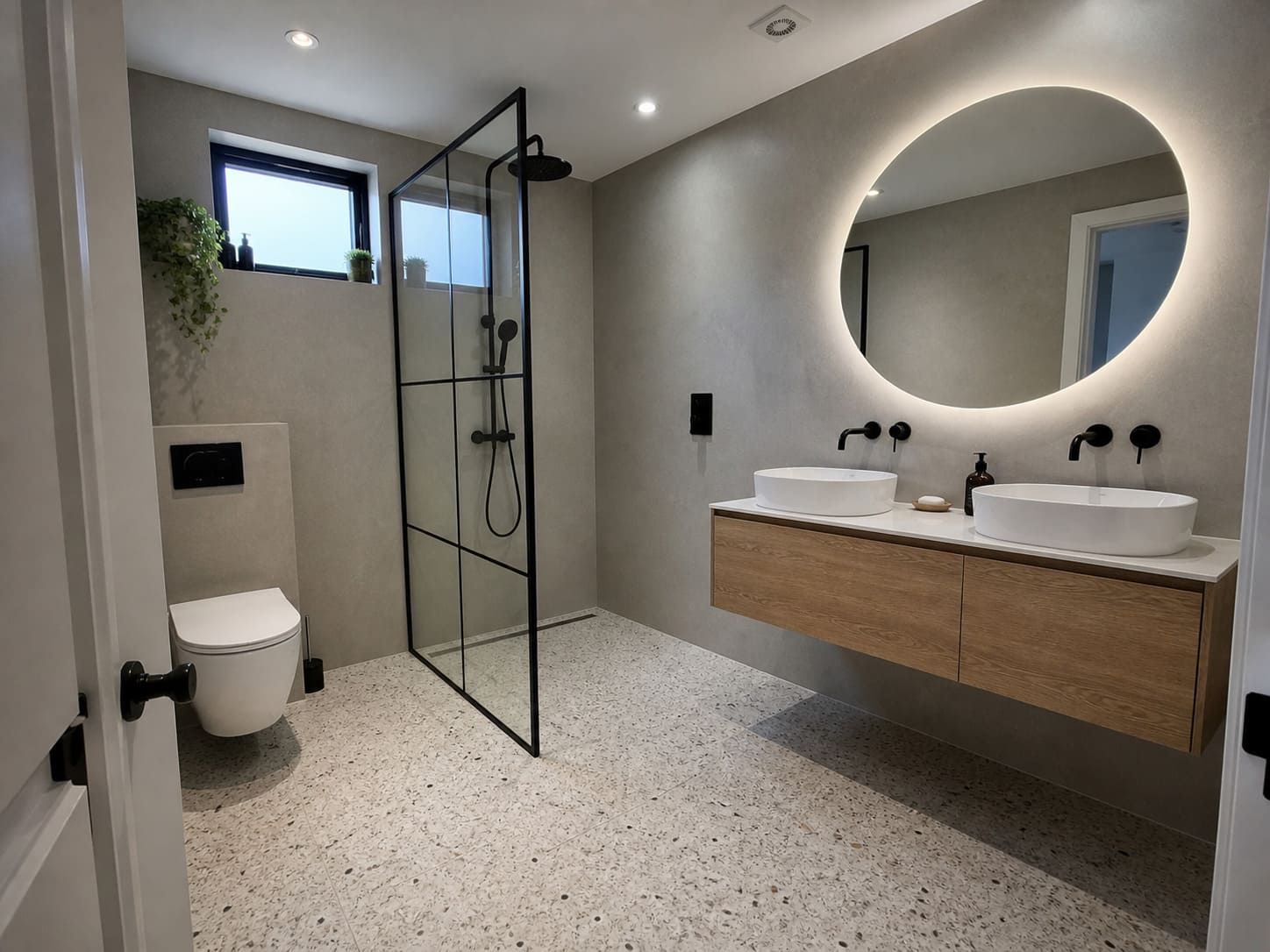
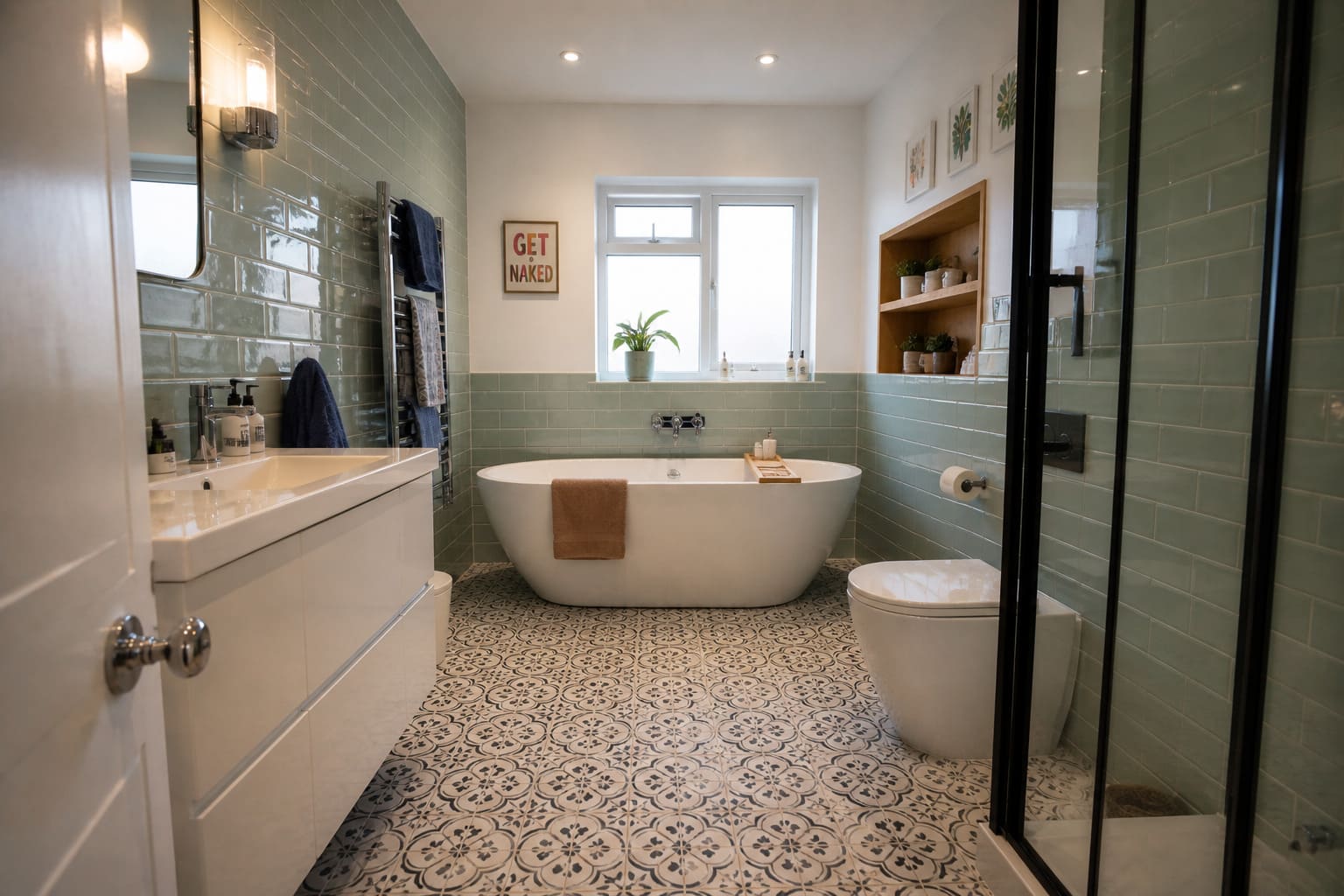
How Bathrooms and Wet Areas Are Fully Rebuilt and Waterproofed
Bathrooms are rebuilt from the base structure. That includes:
- Removing all previous fittings
- Installing new pipework
- Creating correct gradients for waste drainage
- Adding ventilation to meet regulations
- Applying waterproof membranes before tiling
Once waterproofing is done, tiles and fixtures are added. Each step is tested and signed off to ensure long-term performance.
These wet areas are among the most intricate parts of a whole-property upgrade.
Stress Free Kitchen and Bathroom Upgrades
Insulation, Soundproofing and Building Fabric Improvements
Comfort and energy efficiency come from the parts you don’t see. These upgrades often include:
- Wall insulation boards
- Soundproofing to party walls
- Fire barriers and vapour membranes
- Solutions for damp or thermal bridging
They don’t change the look of a home but they transform the way it feels: quieter, warmer, and more efficient.
Sustainability and Eco-Upgrades
You can also include low-energy options. These might be:
- LED lighting and low-energy appliances
- FSC-certified timber
- Water-saving plumbing
- Efficient boilers or heat pumps
They’re not always part of the core scope. However, many homeowners add them during a full refurbishment. Incorporating these can improve home energy efficiency and support sustainability goals.
Carpentry, Joinery and Interior Fit-Out Work You Can Expect
Once the walls are closed, the interiors take shape. This includes:
- Skirtings and architraves
- Doors and door furniture
- Built-in storage like wardrobes or under-stair cupboards
This is known as second fix carpentry. It’s about the finishing detail, the lines, joints, and movement points that bring everything together.
What is included in second fix carpentry?
Typically, second fix joinery includes all internal fittings: doors, trims, skirting, and cabinetry that are installed after plastering. These are the visual finishes that give rooms their final shape and usability.
Flooring, Wall Finishes and Decorative Completion
At this point, walls are skimmed and painted. Floors go down. Tiles are laid. Any decorative features such as cornicing or panelling are installed.
Snagging happens here too. This is the checking stage, where the builder inspects the work for any small faults or finishing issues.
Compliance, Building Regulations and Final Sign-Off
Each element of the work is signed off as it’s completed. This includes:
- Electrical testing and certification (NICEIC)
- Gas installation checks (Gas Safe)
- Final Building Control inspection
- Structural sign-off where needed
You’ll receive a pack of documents to show everything is legal, safe, and compliant with building regulations. These are essential for future resale or property insurance.
How Professional Project Management Keeps the Refurbishment on Track
A well-managed project stays on course. Good management includes:
- Setting the sequence of works
- Scheduling trades
- Dealing with issues when they arise
- Keeping the client informed
How does renovation coordination help homeowners?
Project management ensures each trade hands over to the next without delay. Compact Building Ltd runs projects this way using clear planning and structured communication. It reduces the chance of rework, delays, or miscommunication.
Common Items Not Typically Included in a Standard Full Refurbishment
Some things usually fall outside standard scope. These might be:
- Roof replacement
- Window swaps
- Garden landscaping
- Structural extensions
If these are needed, they’re handled under separate agreements or added as extras with new costings.
Practical Considerations for London Homes
Refurbishing in London comes with extras. You may need:
- Party Wall notices for shared walls
- Parking permits for skips or deliveries
- Permission from your freeholder or management company
- Specialist handling of older or listed buildings
Compact Building Ltd is familiar with these issues and plans for them upfront.
Project Timescales and Refurbishment Duration
How long a project takes depends on the size and complexity. As a guide:
- Flats: 8–12 weeks
- Small houses: 12–16 weeks
- Larger homes or structural work: 16–24 weeks
Planning approvals, lead times, and client decisions can all add time. Good communication helps reduce delays.
Aftercare and Post-Completion Support
Even after the build is complete, support continues. You can expect:
- A set period for snagging and corrections
- Warranty documents for systems and appliances
- Ongoing contact in case anything needs review
A good contractor stays available after completion. Follow-up support and system guidance are part of the experience.
What Homeowners Should Expect From a True Full-Service Refurbishment
You should expect a home that feels right, not just one that looks new. A well-managed refurbishment brings comfort, control, and confidence.
Everything from the pipework to the paint is considered and coordinated. Systems are upgraded. Layouts are improved. Legal compliance is handled. And when it’s done properly, the result is both practical and peaceful to live in.