

What are the most effective layout fixes for small bathroom renovation in London flats?
The most effective layout fixes for small bathrooms in London flats include rethinking door placement, substituting baths for showers, using wall-hung fixtures, optimising storage, selecting compact basins and vanities, improving lighting and mirrors, and relying on coordinated project management. Each measure can help increase floor area, reduce clutter, and create a sense of additional space, all while respecting the limits set by London’s housing and regulatory environment.
Pro Tip: For period conversions, always check lease regulations and engage in early discussions with neighbours before altering layouts.
Petru Balbaie - Director at Compact Building Ltd
The Realities of Small Bathrooms in London Flats
London flat bathrooms are known for challenging proportions and a lack of usable space. Many period conversions and modern builds present unique constraints, from awkward layouts to tight clearances and limited access for trades.
Common frustrations include:
- Doors that block fixtures or cut across important floor space
- Oversized baths squeezing out storage and movement
- Cluttered, surface-level storage units that overwhelm the room
- Little natural light, which means a reliance on artificial solutions
- Regulatory hurdles such as Building Regulations Part M and local planning rules, especially in conversions
Proposing straightforward layout improvements requires familiarity with these London-specific realities. Generic advice rarely accounts for space constraints or the need to coordinate with neighbours, leaseholders, and borough planning departments. A calm, deliberate approach anchored in professional planning and experience is needed to ensure that changes genuinely deliver as intended.
Reconfiguring the Bathroom Door: Gaining Usable Floor Area
The orientation and placement of a bathroom door can shape every other decision in a limited space. An inward-swinging door may block access to the sink or restrict movement to the shower, while an inefficient entrance can create awkward, dead corners.
Options for reclaiming floor area include:
- Swapping to an outward-swinging door, which instantly frees interior space
- Installing a pocket or sliding door, particularly where wall structure allows, to eliminate the door arc entirely
- Relocating the entrance when adjacent hallway or bedroom layouts permit a new approach
Each of these options comes with considerations. For example, outward swings need to accommodate traffic flow beyond the bathroom, while pocket doors require suitable wall cavities and compliance with fire safety standards. Building Regulations and fire compartmentalisation must also be satisfied, both for flats and communal areas.
Professional assessment is important to determine whether these changes are both safe and practical, as unseen factors such as wiring and pipes can affect feasibility. Still, doors should never be treated as afterthoughts in any London bathroom renovation, given their outsized impact on room usability.
Pro Tip: Installing a large mirror aligned with your main light source can dramatically increase brightness and the feeling of space.
Petru Balbaie - Director at Compact Building Ltd
Swapping Bath for Shower: Maximising Usable Space
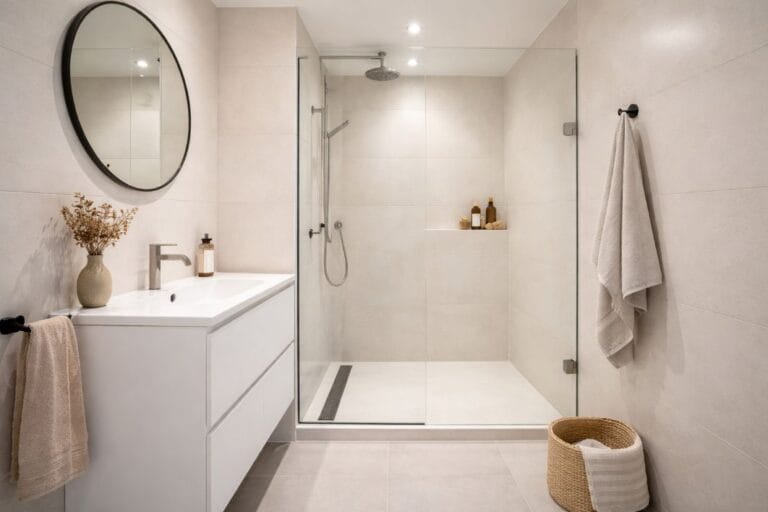
Removing a full-sized bath in favour of a generous walk-in shower or wet room often delivers the most dramatic gain in usable area. For many London homeowners, this choice is as much about future-proofing as it is about daily comfort.
Consider the trade-offs below:
Benefits
- Recovers a significant amount of floor space, especially in narrow layouts
- Enhances accessibility, which supports residents with mobility needs
- Modern shower or wet room design options can add a feeling of openness
Potential Drawbacks
- May reduce appeal to buyers who require a bath, which can affect resale
- Requires professional waterproofing and drainage, especially in older flats
- Plumbing upgrades can be more complex in historic buildings
While many London buyers now prefer showers, it is important to understand local buyer expectations, particularly if selling is likely in the near future. The RICS provides guidance around property value impacts of such changes, and a professional installer will handle waterproofing and drainage to prevent problems down the line. Compact Building Ltd has experience with both bath-to-shower conversions and compliance with the area’s planning rules.
Suitability often depends on personal needs, the building’s construction, and whether the bathroom’s existing footprint will truly benefit from a layout change.
Wall-Hung Fixtures: Creating the Illusion of Space
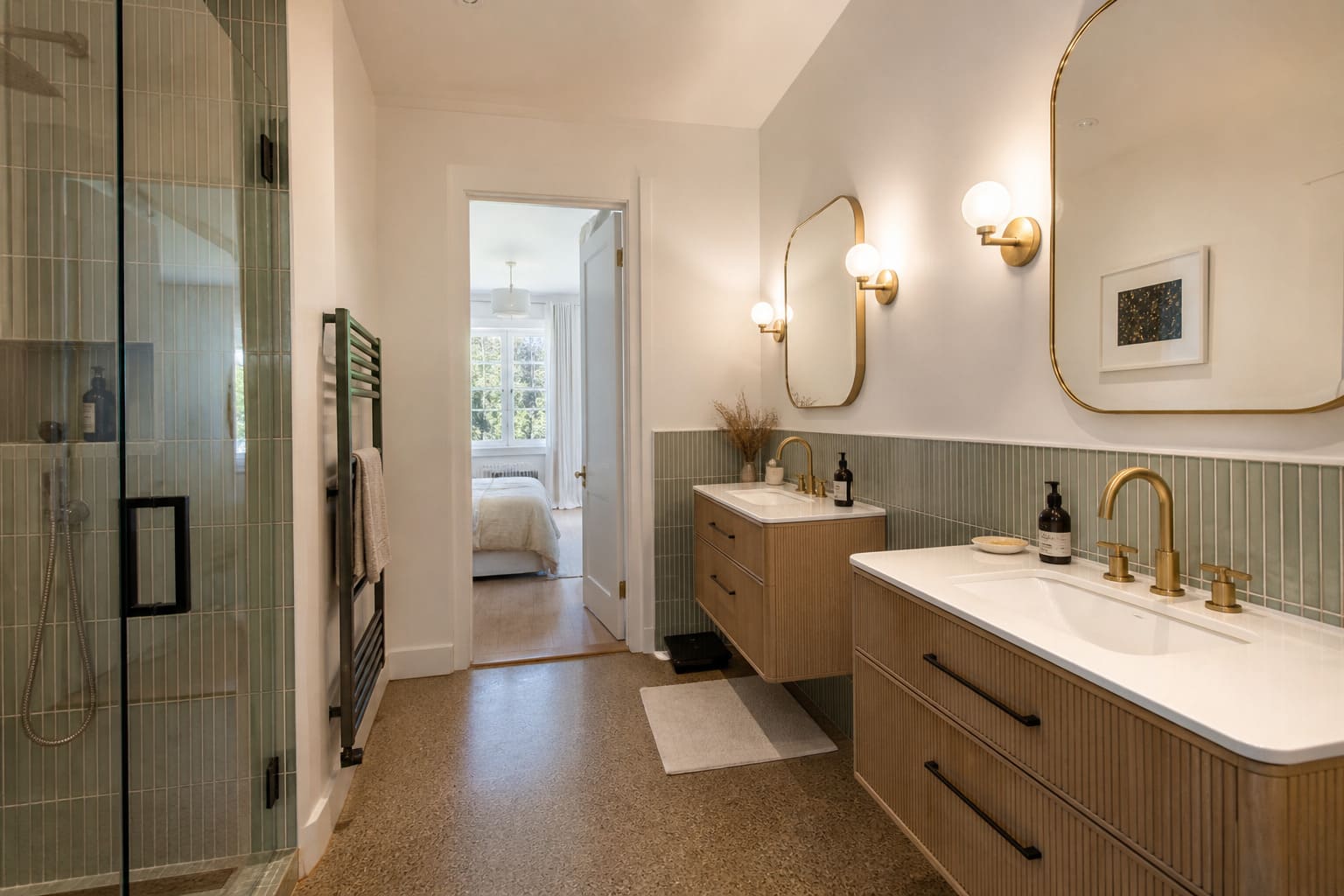
Wall-hung toilets, basins, and storage units can make even the smallest bathrooms feel open and contemporary. Beyond their sleek appearance, these fixtures also reclaim visible floor area, giving an immediate sense of additional space.
Advantages:
- Floating fixtures expose more floor, making cleaning easier and the room less cramped
- Concealed cisterns and in-wall plumbing reduce cluttered visual lines
- Units can be installed at custom heights to suit the household
Considerations:
- Not all London flat walls support the weight of wall-hung fixtures without extensive reinforcement
- Installation costs may rise if walls require structural adaptation
- Ongoing access to cisterns or concealed pipework must be planned at the outset
Suitability checklist:
- Are your bathroom walls solid brick or strong studwork?
- Has your installer confirmed compatibility with Building Regulations?
- Is ongoing access to concealed systems accounted for?
- Does your property require leaseholder approval for structural changes?
Wall-hung fixtures are as much about perception as actual space gained. For many London flats with sturdy supporting walls, they are a practical and aesthetic win.
Request a Personalised Quote
Smart Storage Solutions: Reducing Surface Clutter
Storage decisions in compact bathrooms go far beyond simply finding space for a towel rack. Thoughtfully integrated storage keeps essentials to hand without overwhelming limited square footage.
Well-executed options include:
- Recessed shelves within wall cavities, which allow for sleek, flush storage
- Mirrored cabinets that double as both visual extenders and practical organisers
- Over-toilet shelving or cabinetry to make the most of otherwise unused vertical space
By contrast, freestanding chests or baskets can dominate tight areas and make even modern designs feel crowded. Future needs, including changes in family size or routine, and deserve attention at the planning stage to prevent short-lived arrangements.
Storage dos and don’ts:
- Do prioritise built-in units where possible
- Do use mirror-fronted cabinetry to combine function and brightness
- Do consider vertical storage up to ceiling height
- Do not rely on freestanding pieces in tiny rooms
- Do not sacrifice necessary floor area for bulky storage
Storage must be considered from the start, not as a last-minute compromise, to help compact bathrooms serve daily routines with ease.
Rethinking the Basin and Vanity: Prioritising Function Over Size
How much space does your current basin and vanity really claim? Replacing oversized or poorly positioned fixtures with slimmer or corner designs can dramatically improve both movement and practicality.
Options worth weighing:
- Compact basins designed for modest depths, sometimes wall-mounted to save even more space
- Corner basins that make use of an otherwise dead zone and open up the main walkway
- Slimline vanities with hidden under-basin storage, keeping items both accessible and neatly out of sight
- Pedestal basins, which are rarely ideal in small bathrooms due to wasted storage potential
The right choice balances daily needs with the realities of London layouts. A smaller, well-sited vanity can support storage and washing routines without dominating the floor or crowding other elements.
A careful selection, made with a view to both use and aesthetics, often delivers improvements beyond what square footage alone suggests.
Improving Lighting and Mirrors: Improving the Sense of Space
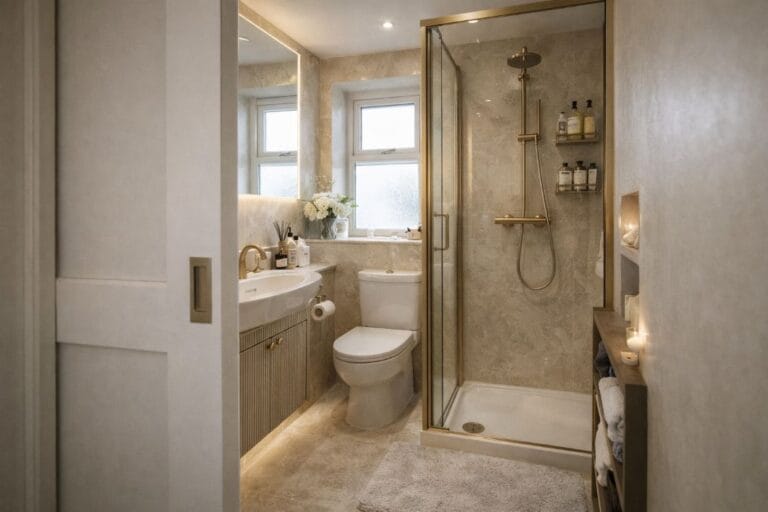
Lighting and mirrors play a important role in shaping mood and spatial perception in the smallest of London bathrooms. Good design lifts a gloomy box into a welcoming, practical environment.
Lighting
- Layered lighting helps address corners where shadows fall, using a combination of ceiling and task lights to match zones
- Aim for warm, diffuse illumination to avoid harsh reflection and make surfaces feel broader
- Always ensure compliance with Building Regulations Part P for electrical safety
Mirrors
- Large mirrors reflect both light and space, visually doubling narrow rooms
- Position mirrors opposite sources of natural or artificial light to increase reflection and depth
Quick wins:
- Replace a small mirror with one that stretches the length of the basin area
- Add LED backlighting for depth without bulk
- For windowless spaces, focus on cool white lighting to counteract the lack of daylight
Small upgrades to lighting and mirror placement often have a surprisingly transformative effect, enabling even a compact bathroom to feel open and welcoming.
Coordinated Project Management: Sequencing Work for Minimal Disruption
Sequencing each task thoughtfully can make the difference between a smooth, timely project and a disruptive, costly process. In a London flat, cramped access, shared corridors, and building restrictions heighten the risks and challenge of renovation.
An example from local experience: Unplanned plumbing work delayed by an electrician’s overschedule led to walls being opened twice, doubling costs and resident inconvenience.
A measured approach relies on:
- Careful assessment and scheduling of all required trades
- Clear communication with leaseholders, neighbours, and building managers
- Coordinated deliveries to avoid unnecessary congestion or downtime
- Adherence to legal requirements for access and waste removal
- Sequencing tasks in a logical, conflict-free order to minimise rework and disruption
A company such as Compact Building Ltd provides structured management that protects homeowners from common pitfalls, from missed build stages to escalating budgets. Professional oversight is especially valuable where flats impose tight deadlines, strict hours, or access restrictions.
The outcome is a smoother experience, lower risk of error, and greater predictability for everyone involved.
Making Space Work for You: The Value of Deliberate Renovation
Space gains in London flat bathrooms are rarely the result of one big gesture. Instead, they usually stem from a series of measured, well-planned changes that together transform both usability and atmosphere.
Key fixes to remember:
- Rethink the bathroom door to reclaim precious floor space
- Consider swapping the bath for a shower to unlock layout possibilities
- Choose wall-hung fixtures to promote the illusion of a larger room
- Integrate storage to keep surfaces clear and essentials out of sight
- Select compact basins and vanities that serve real-life needs
- Improve lighting and mirrors to multiply both brightness and sense of space
- Sequence project stages with professional oversight to avoid missteps
Professional planning and experienced project management are not luxuries within London’s compact flats. They are the surest path to a successful, calm, and value-driven renovation. Each considered decision moves you closer to a space that works with, rather than against, your home’s realities.