
Which layout actually suits your London kitchen extension?
The right layout depends less on fashion and more on how your household uses space every day. Open plan can feel generous and sociable, while broken plan can give you privacy, quieter zones, and better control over noise and mess. In London homes, the best answer usually comes from balancing daily routines, structural limits, and how you expect the space to work in a few years.
Settle the Real Question: What Do You Actually Need From Your Kitchen Extension?
What matters most is not whether a layout looks current in a photograph. What matters is whether it supports breakfast before school, late work calls, visiting relatives, and the ordinary traffic of daily life.
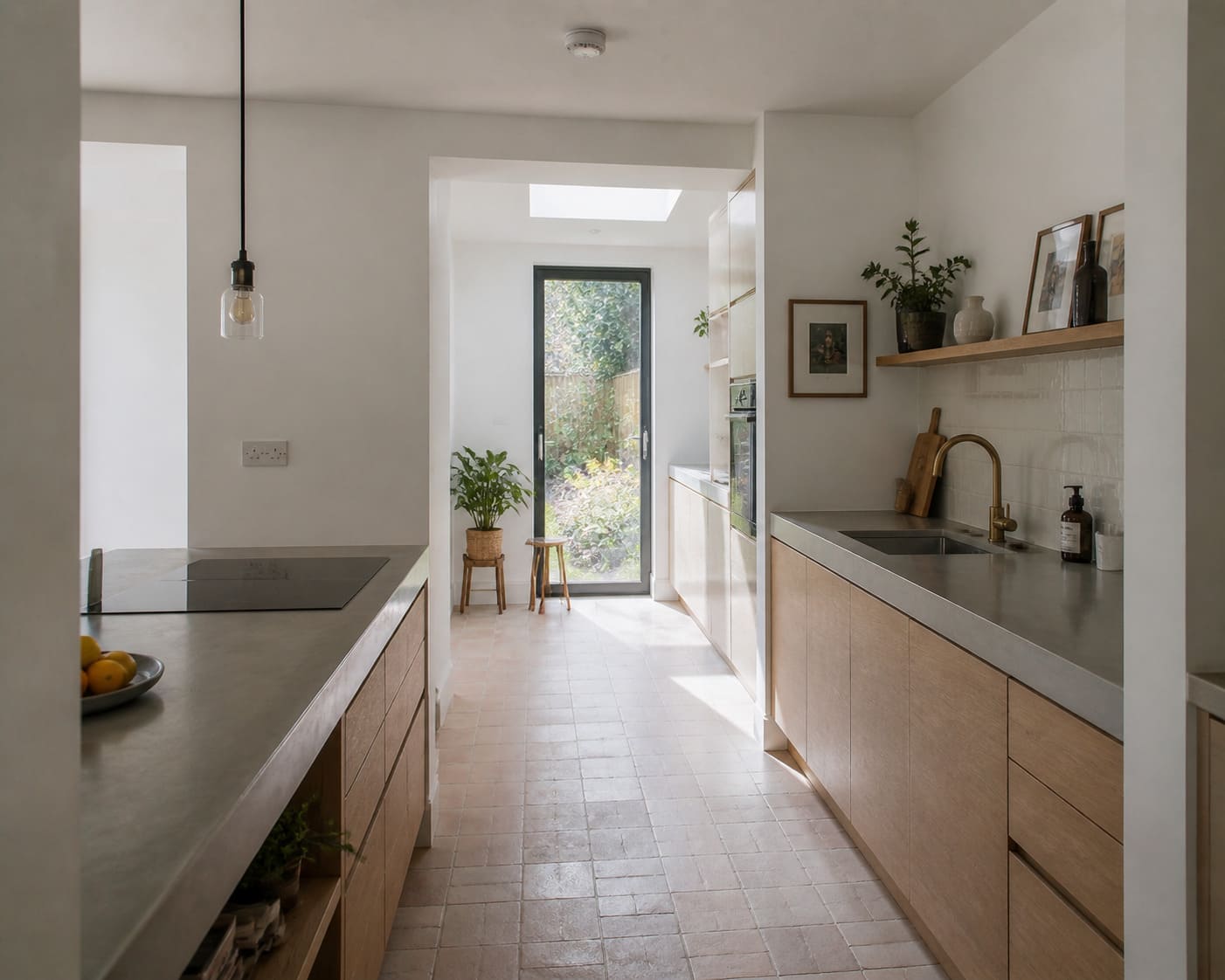
A family kitchen extension in London often has to do several jobs at once. One household may want a long sightline from hob to garden so adults can cook and talk while children play nearby. Another may need defined zones because one person starts work early, another studies at the table, and someone else wants a room that does not feel permanently on show.
Style preferences still matter, but they should come second. A wide, uninterrupted room can sound appealing until extractor noise, laundry baskets, and work laptops all compete for attention. By contrast, a layout with some separation may sound less glamorous on paper, yet feel calmer and more useful once you live in it.
Future use deserves the same honesty. Many people assume an open arrangement is the flexible option, although flexibility depends on the household itself. If your kitchen extension needs to support entertaining, privacy, storage, and multi-use spaces without friction, choosing kitchen design becomes an exercise in behaviour, not image. RIBA guidance often points people back to how spaces are actually used, and that is the sound place to begin.
Speak with our experts about the best layout for your London home. Get tailored advice for practical, stylish results.
Schedule Your ConsultationUnpack the Realities: Weigh the Constraints of London Homes
A typical London terrace can look straightforward from the garden and complicated the moment design work begins. Rear extensions often meet narrow side returns, shared boundaries, ageing walls, awkward drainage runs, and limited routes for materials to reach the site.
Planning and technical rules shape the layout much earlier than many homeowners expect. London planning authorities may have views on scale, glazing, overlooking, and conservation context, while Building Regulations Part B influences escape routes, fire safety, and how rooms connect. On top of that, the Party Wall Act can affect timing and neighbour coordination where work touches a shared wall.
Some constraints are simply non-negotiable:
- Structural walls that cannot be removed without major engineering
- Access limitations that affect build method, cost, and delivery sequence
- Historic property features that need to be retained or worked around
Basement flats and lower ground homes add another layer. Light wells, head height, damp risk, and ventilation can all shape what a kitchen extension planning scheme can realistically achieve. In period property kitchen projects, the challenge is often less about adding space and more about joining old and new without making the whole arrangement feel unresolved.
Ignoring these limits early can push costs up later through redesign, revised approvals, or more steelwork than first expected. Firms working regularly on London home constraints, including Compact Building Ltd, tend to focus heavily on this stage because layout decisions that ignore the building itself rarely age well.
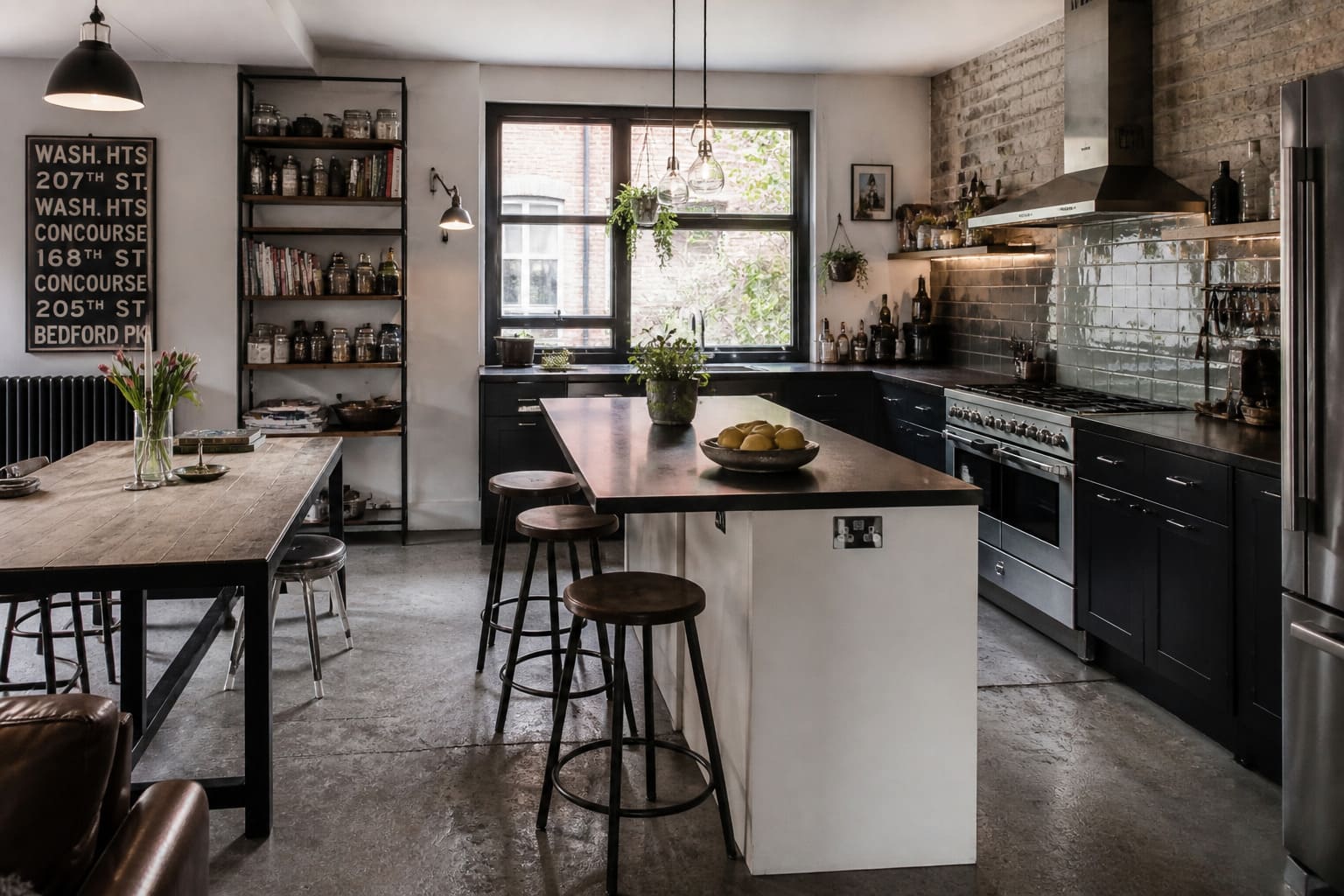
When planning your kitchen extension, factor in future mobility and work-from-home needs to ensure lasting comfort and adaptability.
Analyse the Options: Map Out the Pros and Cons of Open Plan
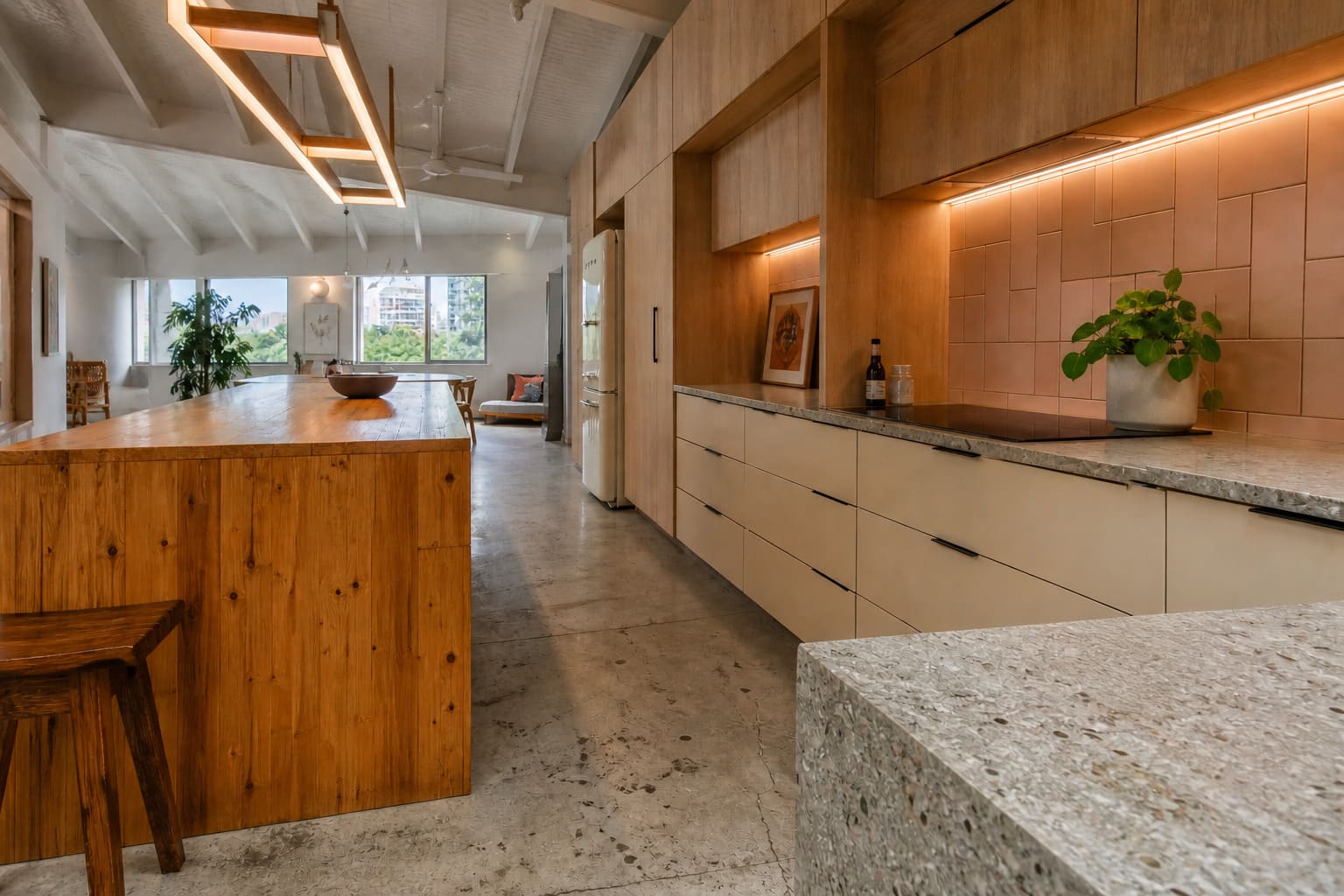
Open plan works well in the right home. It can bring daylight more detailed into a property, make a modest footprint feel larger, and create a strong social centre for cooking, eating, and spending time together.
Light is usually the first attraction. Removing barriers between kitchen, dining, and living areas can help a rear extension borrow brightness from rooflights, doors, and side glazing. In long London houses, that visual continuity often changes how the whole ground floor feels.
Sociability is another genuine benefit. An open kitchen extension allows the person cooking to stay part of the conversation. For households that entertain often, the room can feel generous without needing a huge footprint.
The drawbacks tend to appear in daily use. Appliances are noisy, and hard surfaces can amplify sound. A dishwasher running during a video meeting or a blender going off beside homework can make open plan living feel less relaxed than expected.
Heat and energy use also deserve attention. Larger connected spaces can be harder to heat evenly, which means that layout has some link to Building Regulations Part L and overall thermal performance. Good insulation helps, but zoning a space gives you more control than a single broad volume.
Tidiness becomes part of the design question too. In a fully open room, cooking smells, plates, packaging, and general clutter remain visible from almost everywhere. Some owners do not mind that trade-off. Others tire of it within months, especially in homes where the kitchen is active from early morning until late evening.
Estate agents and London homeowner forums often present open plan as widely appealing, yet resale value is rarely that simple. Buyers vary. One person sees space and light, whereas another sees noise, less privacy, and nowhere to close a door.
Examine the Alternative: Explore the Case for Broken Plan
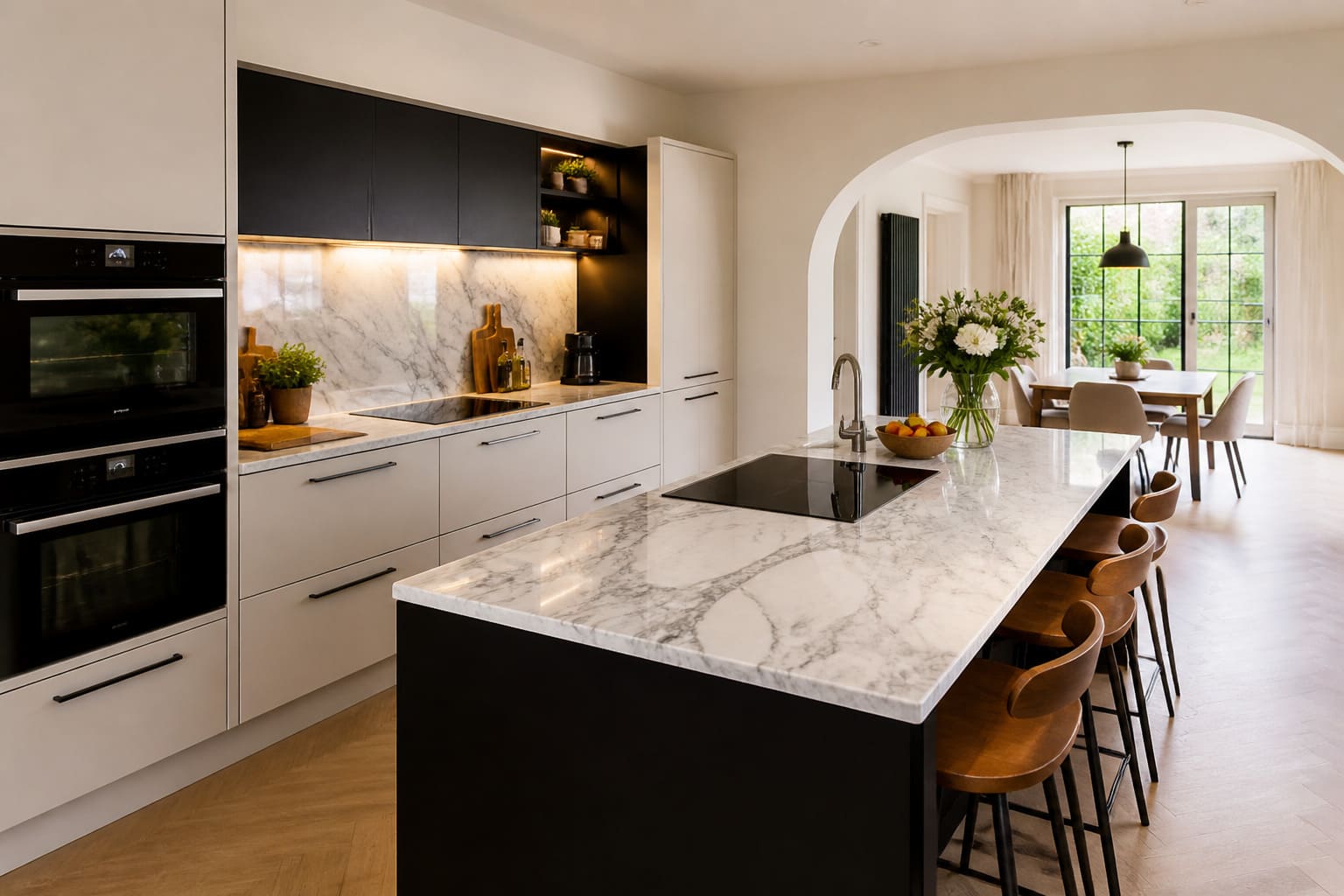
Broken plan means partial separation rather than complete division. The layout still allows movement and visual connection, but it uses elements such as partial walls, glazed screens, joinery, pocket doors, or level changes to create distinct zones.
That distinction matters in London homes where one room often needs to absorb several activities. A broken plan kitchen can keep the cook connected to the dining area while giving the seating zone a little shelter from noise and mess. In practical terms, that may be the difference between a room that looks good and a room that functions well all week.
Acoustic management is one of its strongest points. A glazed screen can hold light while softening sound. Sliding doors can close off a work area for an hour without making the whole extension feel chopped up. In a compact footprint, those small adjustments can improve the room far more than an extra stretch of empty floor.
Character is another reason some owners prefer this approach. Period houses often sit more comfortably with subtle zoning than with one completely opened rear span. A partial wall can give cabinetry a proper stopping point, and a change in ceiling treatment can define where cooking ends and relaxing begins.
Broken plan is not automatically better. Poorly handled partitions can interrupt daylight, squeeze circulation, or leave the extension feeling hesitant. Building Regulations Part M also matters where access and movement need to remain straightforward, so every divider has to earn its place.
London property surveyors and interior designers often see the strongest results where separation is used sparingly. One screen, one pocket door, or one shift in level can organise a semi-open kitchen without turning it back into a series of disconnected rooms.
Stress-Test Your Decision: Anticipate Long-Term Use and Adaptability
A layout that suits you now may feel different after a new child, a change in work pattern, or an older relative moving in. London homes rarely have spare rooms waiting in reserve, so the kitchen extension often carries the pressure of future change.
Remote and hybrid work have sharpened this issue. A dining table in an open plan room may double as a desk for a while, but constant household noise can wear thin. A broken or hybrid arrangement can create a calmer edge for focused work without demanding a fully separate study.
Family changes matter just as much. Younger children often suit visibility and easy supervision, while teenagers and adults tend to want some retreat. A space that allows both connection and temporary separation usually adapts better over time than one based on a single phase of family life.
Accessibility should also be part of the conversation early, especially in long-term kitchen use planning. Clear routes, sensible door widths, and straightforward movement between cooking, dining, and garden access can all affect how usable the room remains if mobility changes later. RICS professionals and London property valuers tend to look favourably on layouts that feel practical across different stages of life.
One simple test can help when weighing kitchen extension adaptability:
- Picture a normal weekday in five years.
- Picture a noisy weekend with guests or extended family.
- Picture the room if one person needs quieter, easier, or more supported use.
If one layout only works in the best-case version of your life, it is probably too narrow a choice.
Find out what your ideal kitchen extension might cost. We offer clear pricing and transparent guidance.
Get Your QuoteWatch What’s Changing: Track the Shift in London Kitchen Design Priorities
London kitchen design priorities are shifting away from a simple open plan versus broken plan debate. Hybrid layouts are becoming more common because they reflect how people actually live, with connected spaces that still allow acoustic zoning, privacy, and better control of heat and light.
Sustainability is also pushing decisions in a more measured direction. Better glazing, improved insulation, and tighter building control expectations mean layout choices increasingly sit alongside energy performance rather than apart from it. A large open kitchen extension may still work well, but it now has to justify how it will be heated, ventilated, and shaded through the year.
Home tech is changing expectations too. Smart lighting, zoned heating, quieter extraction, and integrated ventilation make it easier to fine-tune one space for several uses, although they do not remove the need for sound planning at the layout stage. Technology can support a good arrangement, yet it rarely rescues a weak one.
Across the next 12 to 24 months, the London homes likely to feel most successful will be the ones that combine flexibility with restraint. Expect more kitchen zoning, more hybrid planning, and closer attention to acoustics, energy use, and how one extension can serve work, family life, and privacy without asking a single room to do everything in exactly the same way.