

What are the most practical layout ideas for small kitchens that actually work?
Small kitchens can become highly efficient and enjoyable through clever layout planning. The amount of usable space depends more on how it is arranged than how large it is. Smart configurations remove bottlenecks, improve movement, and enhance the way you use your kitchen. The ideas that follow are designed to bring real improvements to small kitchens of all shapes and sizes.
Pro Tip: Use open shelving above eye level to add storage without closing in the space.
Petru Balbaie - Director at Compact Building Ltd
Why a Good Layout Matters More Than Kitchen Size
Everyone has had that frustrating kitchen moment: trying to chop vegetables on a cramped surface, opening a cupboard into your headspace, or bumping into someone because the layout does not support two people. These daily annoyances usually stem from poor organisation rather than limited space.
A carefully structured layout improves the way a kitchen functions. It smooths the workflow between key areas like the hob, fridge and sink. It reduces awkward angles and increases comfort. Small spatial planning decisions have a big impact on how a kitchen feels, and improving flow can make even a tight space feel functional and calm.
Start With Your Kitchen Shape: The Blueprint for Making Space Work
The basic shape of your kitchen determines what is realistically possible. Galley kitchens require a different strategy from L-shaped or U-shaped ones. One-wall kitchens are even more specific and need a clear division of purpose along a single line.
In many UK flats or terrace conversions, the layout is determined by the building’s footprint. Understanding this foundation helps you make the most of what you have. Recognising your kitchen’s configuration is the first step toward choosing a setup that truly works.
Small-Kitchen Ergonomics: Movement, Spacing and Everyday Comfort
A small kitchen must still allow for comfortable movement. There should be approximately one metre between facing counters to avoid feeling trapped. Doors on appliances or cabinets must open fully without creating blockages. The core work triangle, made up of the hob, sink and fridge, should support an efficient cooking workflow.
This type of ergonomic planning is not limited to new builds or renovations. Renters can improve layout using removable organisers, portable preparation areas, and clever wall storage. A few layout-conscious choices can make everyday cooking smoother and reduce friction in daily routines.
Idea 1: Make a One-Wall Kitchen More Functional With Clear Zones
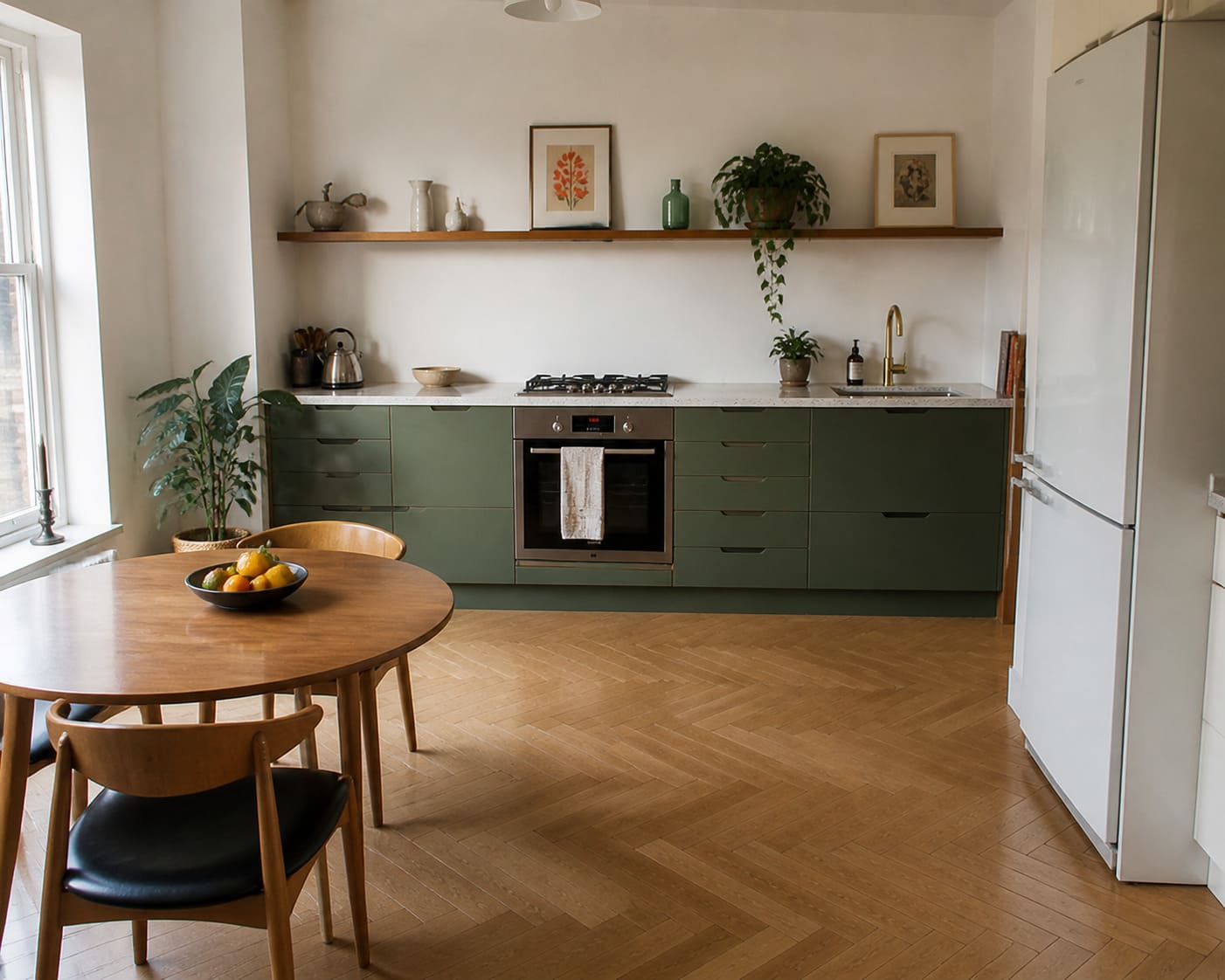
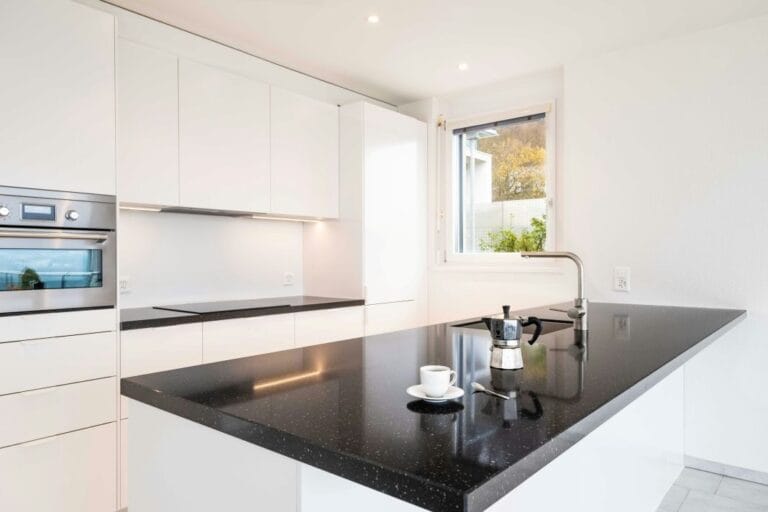
A single-wall kitchen can be surprisingly functional if each section has a clear role. Dividing the run into zones for cleaning, preparation, and cooking prevents disorganisation and makes movement more intuitive.
Tall cupboards work best when grouped to one side. This avoids a heavy look across the middle of the room. Adding vertical storage opens up the worktop, and task lighting supports specific actions. When everything flows from one zone to the next, even a linear configuration can feel efficient.
Idea 2: Improve Galley Kitchens With Balanced Design
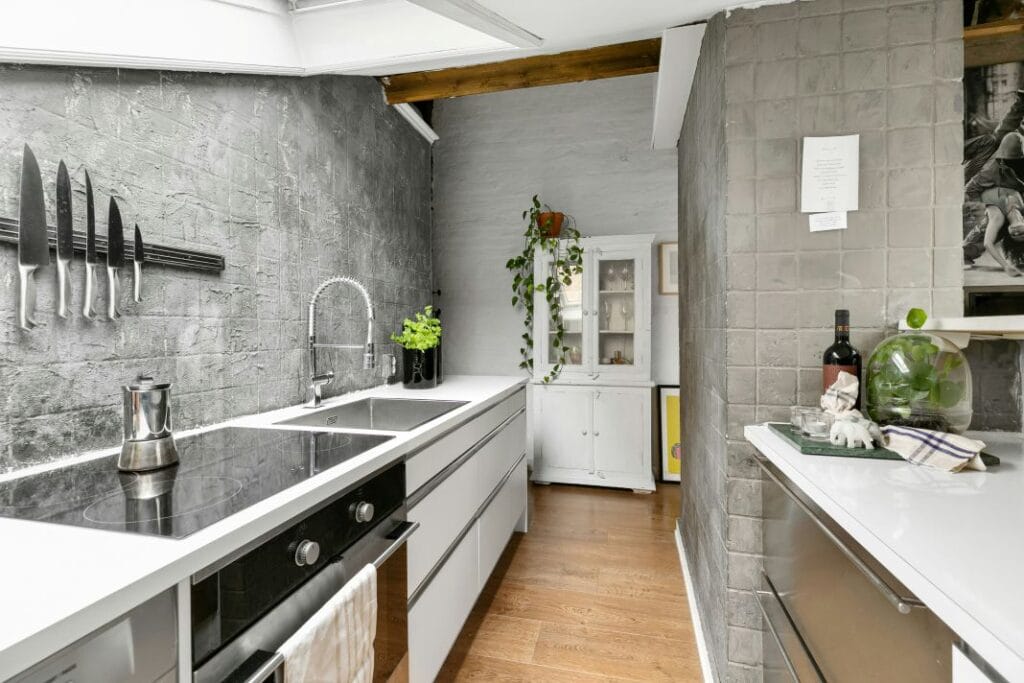
Galley kitchens are often perceived as cramped, but they function well when designed with movement in mind. Keep tall cupboards on only one side to prevent the room from becoming visually narrow. Ensure that the central walkway remains at least one metre wide.
Avoid placing the sink and hob opposite each other, as this layout causes unnecessary back-and-forth movement. Use good lighting and reflective surfaces to maintain visual openness. This efficient layout supports strong kitchen workflow and is common in compact UK homes.
Idea 3: Get the Most From L-Shaped Layouts
An L-shaped kitchen provides workspace on two connected walls, making it feel more open than other arrangements. Use the longer run for your main activities: cooking, cleaning and preparation. Place taller items such as the fridge on the shorter side.
Use corner units with pull-outs or rotating shelves to solve dead-corner issues. Replace some upper cabinets with open shelving to maintain a sense of openness. L-shaped layouts support natural, curved movement and can be tailored for ergonomic kitchen zones.
Idea 4: Fit More Into a Small U-Shaped Layout
U-shaped kitchens are excellent for storage and worktop space, but they can feel enclosed if not carefully planned. Reduce upper cabinets on one side or replace them with open shelving to maintain visual balance.
Design your appliance layout to form a compact, usable work triangle that supports uninterrupted kitchen flow. These kitchens work well in rooms with square footprints, often found in small flats. Done properly, this setup offers generous preparation space without limiting movement.
Pro Tip: A rolling cart gives you instant extra prep space without blocking kitchen flow.
Petru Balbaie - Director at Compact Building Ltd
Get a Personalised Kitchen Fitting Plan
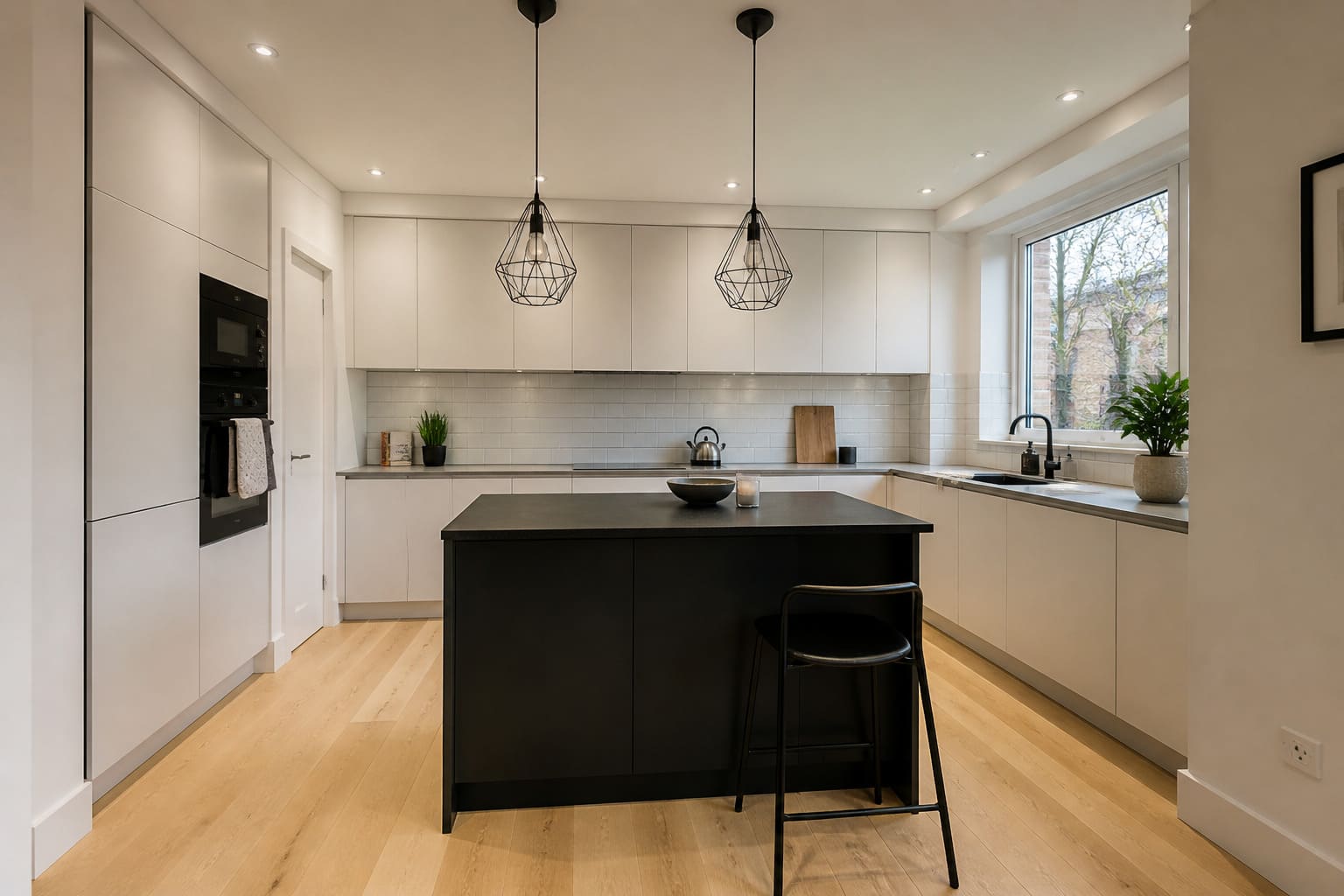
Idea 5: Add an Island or Peninsula Without Causing Obstruction
An island may seem impractical in a small kitchen, but compact versions or peninsulas are viable if space is used wisely. Use slimline furniture or a rolling trolley. Fold-down extensions attached to a wall can also provide temporary surface area.
Ensure that walkways remain unobstructed and that movement between work zones is unhindered. These additions help define spatial zones, support food preparation or dining, and add function to your layout without restricting circulation.
Idea 6: Use Vertical Space to Keep Counters Clear
Small kitchens often contain more usable space than expected, especially above eye level. Install shelves, rails or tall cabinets to store upwards rather than outwards. Pegboards are ideal for organising utensils or spices without cluttering surfaces.
Do not overcrowd the walls. Select light materials and space out storage areas to keep the room feeling open. Clearing the counter improves usability and gives the kitchen a more spacious appearance.
Idea 7: Replace Low Cabinets With Drawers for Better Access
Drawers are often more practical than base cupboards, particularly in tight areas. They allow you to see and reach everything easily, without bending or shifting items.
Use dividers to keep drawers organised. In rented homes, consider using drawer inserts or freestanding units placed inside cupboards. This simple change improves access and increases usable storage.
Idea 8: Shrink Appliance Sizes to Free Up Layout Options
Many appliance manufacturers now offer compact models suitable for smaller homes. Slimline dishwashers, narrow fridge-freezers and reduced-depth ovens save space while still fulfilling essential needs.
Choose models with energy-saving features and good reliability ratings. Washer-dryers that fit under counters are especially helpful for reclaiming worktop space. Downsizing appliances gives you more options when planning a flexible kitchen layout.
Idea 9: Combine Functions to Get More From Every Feature
Multifunctional features provide much-needed versatility in a small kitchen. A bench with hidden storage or a fold-out table attached to a wall can be extremely useful. Shelves that double as racks for pans or utensils serve multiple purposes.
Even smaller adjustments, such as using a rolling cart that functions as both storage and serving space, can have a big impact. These additions help you maximise value from every part of your layout without creating clutter.
Renter or Owner? Tailor Your Tweaks to Your Limits
Renters do not have to live with inefficient layouts. A variety of non-permanent upgrades are available that improve usability without requiring renovation. These changes can make a small kitchen feel more liveable and organised.
Quick Checklist for Renters
- Use adhesive hooks for hanging utensils or towels.
- Add a portable induction hob for extra cooking flexibility.
- Invest in freestanding drawer units or carts.
- Use fold-down wall tables for compact dining.
- Try modular shelves that do not require drilling.
- Place a rolling trolley as a moveable preparation surface.
- Replace cupboard handles with easy-to-fit alternatives (store the originals safely).
Homeowners have more freedom to alter layouts, whether that means repositioning appliances, replacing cabinets, or making more extensive changes. In either case, targeted layout improvements can make the kitchen more efficient, comfortable and visually appealing.

Mistakes That Can Make a Small Kitchen Feel Even Smaller
Several common layout problems reduce the sense of space in a kitchen. Overusing upper cabinets can make a room feel boxed in. Large appliances block pathways. Poor lighting leaves dark spots and limits visibility.
Doors that swing into each other or into walls interrupt flow and restrict access. Too much decorative clutter adds to the sense of confinement. These mistakes are often easy to correct and fixing them can significantly improve layout and comfort.
When to Bring in a Fitter for Better Use of Space
If your kitchen has structural limitations or layout decisions feel overwhelming, it might be time to consult a professional. An experienced kitchen fitter can assess your space and suggest changes that improve flow and functionality.
Compact Building, for example, regularly works with kitchens in smaller UK homes. Their team understands how to design space-saving kitchen layouts that optimise what you already have. A professional consultation often reveals solutions that are not obvious when working alone.
Bringing It All Together: A Kitchen That Feels Right
A small kitchen can be functional and pleasant when the layout is carefully considered. Practical flow, comfort and space efficiency matter more than square footage. Begin with one improvement and observe the results.
If needed, seek help from professionals who specialise in space-conscious kitchen layouts, such as Compact Building. Sometimes, even minor changes can lead to significant benefits.
When your kitchen layout supports your routine rather than hindering it, you will find that a compact kitchen can feel surprisingly spacious and enjoyable.
FAQs About Small Kitchen Layouts
What is the best layout for a 2m x 3m kitchen? A galley or L-shape layout is typically most effective. These layouts make good use of walls while allowing sufficient space for movement.
Can you fit an island in a galley kitchen? It depends on the room’s width. A galley kitchen should have at least 100–120cm between opposing units. If a full island does not fit, consider a narrow trolley or a fold-down peninsula instead.
What are the smallest appliance sizes in the UK? Slimline dishwashers can be as narrow as 45cm, compact ovens range between 50 and 60cm, and under-counter washer-dryers are often around 60cm wide. Always measure your available space before choosing an appliance.