

Can you add a downstairs toilet to a London home, and what usually affects the cost?
Yes, many London homes can accommodate a downstairs toilet, even where the original layout never allowed for one. The main issues are space, drainage, ventilation, building control, and the way older homes handle access and structure. Costs vary widely because a simple fit-out near existing pipework is very different from creating a new WC in a tight period property with awkward drainage or regulatory constraints.
A London Floor Plan That Never Had a Chance vs. The Realities of Modern Living
A guest is in the hall, someone is coming down the stairs, and the whole house knows exactly where the only toilet is. In many London homes, that scene still feels normal, even though it rarely feels convenient.
Victorian and Edwardian layouts were built for a different pattern of daily life. Ground floors often prioritised reception rooms, narrow corridors and kitchen space at the rear, with little thought given to a separate ground floor WC. That does not mean the design was poor. It simply reflects a period before current expectations around privacy, accessibility and family routines took hold.
Modern living places different demands on the same footprint. Parents want children to reach a toilet quickly. Older relatives may struggle with stairs. Guests expect a little more privacy than a bathroom next to the bedrooms. In compact London home layouts, the absence of a ground floor WC can shape the rhythm of the whole day in ways that homeowners often put up with for years.
That tension between heritage and function is common across period property adaptation in London. Historic England and London Borough Planning Departments are usually part of the wider conversation only when a home has listed status or sits within tighter local controls, yet the practical issue starts much earlier than that. A house that worked well in 1900 may need careful adjustment to work properly now.
Tell us what you are planning and we will give you an honest assessment, a clear quote, and a realistic timeline.
Get a Free QuoteSpace You Think You Don’t Have vs. The Nooks That Actually Work
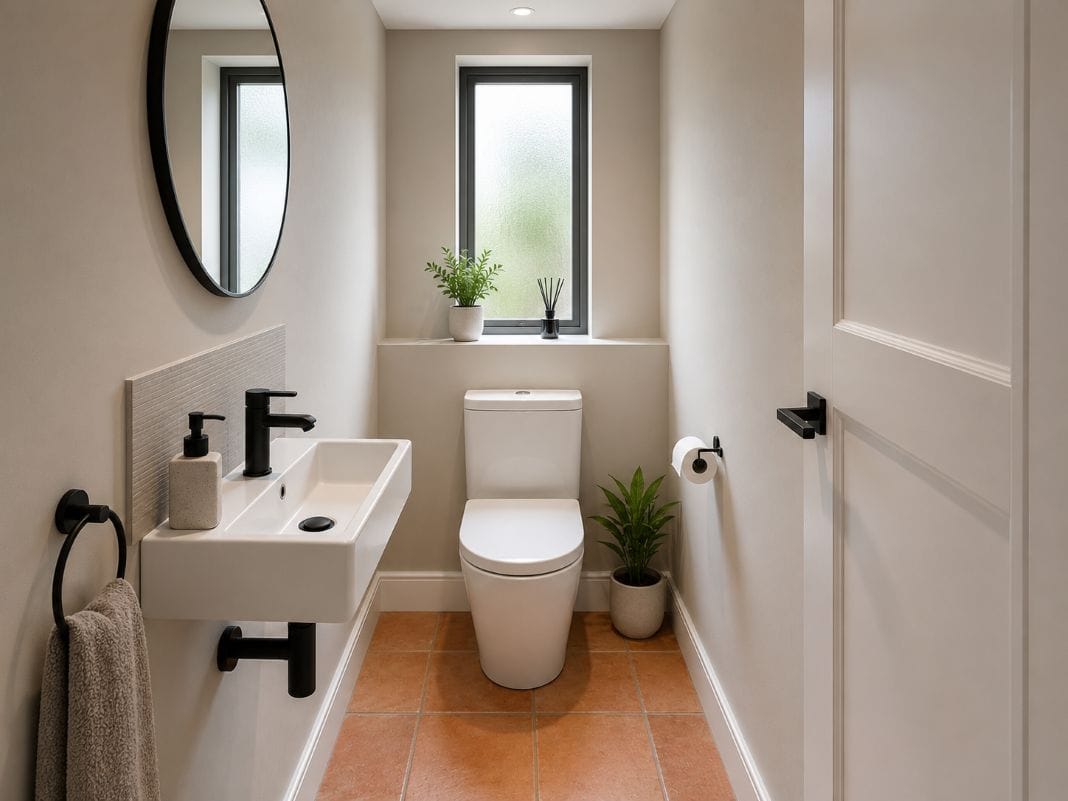
One of the more surprising examples is the under-stair cupboard that everyone assumes is too shallow to be useful. With the right headroom, a sensible door position and nearby plumbing, that awkward void can sometimes become a workable small space WC.
Many homeowners underestimate what their floor plan can offer because they picture a full bathroom instead of a compact cloakroom. Building Regulations Part M and wider design guidance often push the conversation beyond whether something can physically fit. A downstairs toilet location also has to feel usable once the door is closed, which means clearance, access and room flow matter just as much as raw dimensions.
Several spots come up again and again in London property constraints:
- under the stairs, where headroom and door swing allow
- within part of a utility room or enlarged hallway cupboard
- beside a rear kitchen extension, where drainage routes are shorter
Another property may look promising on paper and still make a poor candidate. An under-stair conversion with very limited height at the pan position can end up uncomfortable. A WC carved out of a narrow passage can interrupt movement through the ground floor so badly that the trade-off stops making sense.
RIBA guidance and London property surveyors tend to treat these decisions practically. The useful question is not whether a minimum WC size can be squeezed in, but whether the finished room will work day after day without becoming an irritation. A tight but properly planned cloakroom can feel entirely natural. A forced installation can leave the door, basin and toilet competing for the same few inches.
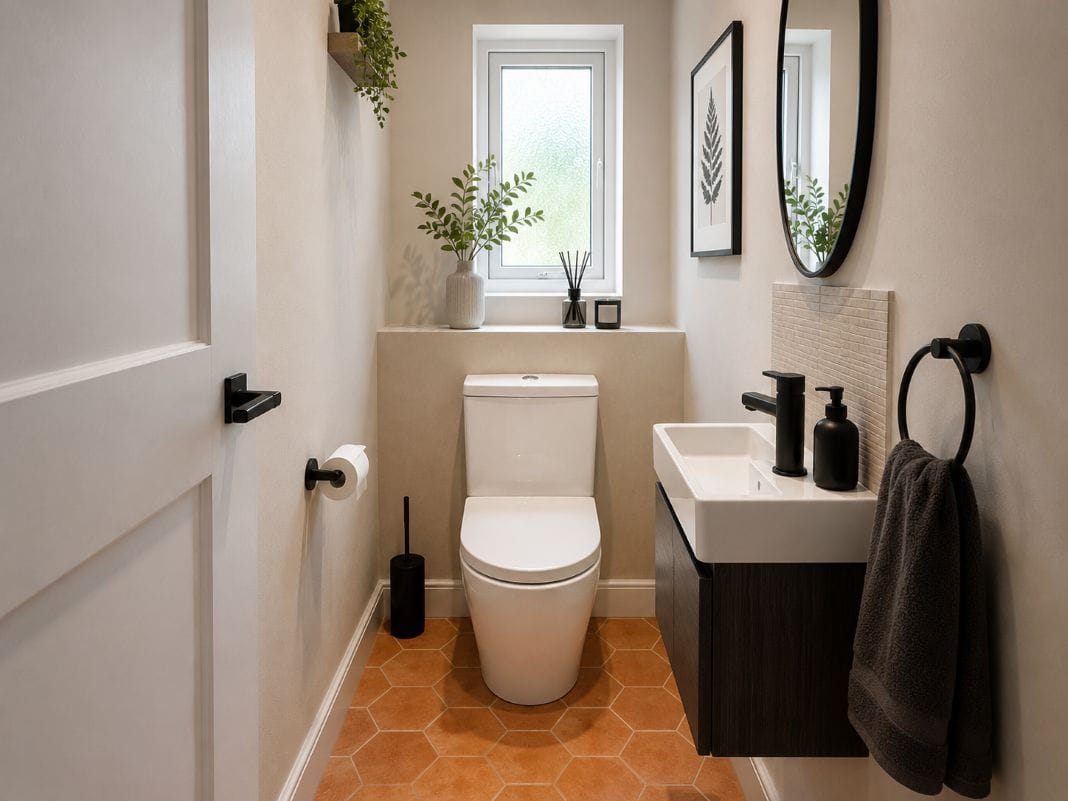
Always confirm local building control requirements early to avoid delays and ensure your project moves smoothly from approval to completion.
What Looks Simple on TV vs. What Planning and Regulations Demand
“You do not need permission for a toilet, right?” That assumption causes more trouble than the toilet itself.
In many cases, planning permission is not the main hurdle for an internal downstairs WC. Building control usually is. London Building Control will want the work to comply with rules covering sanitation, drainage, ventilation and structural changes where relevant. Building Regulations Part G comes into play for sanitary provision, and the practical details often matter more than the idea itself.
Drainage is where apparently simple projects become more involved. A new WC needs a workable connection to the soil stack or another suitable drainage solution. If the proposed location is far from existing waste routes, the layout may need more than a new toilet and basin. Floor levels, joist direction and available falls can all shape what is feasible, and Thames Water requirements may become relevant where drainage arrangements change materially.
Ventilation is another common tripwire. A cloakroom without an opening window may need mechanical extraction that meets the required standard. That sounds minor until cables, duct routes and external terminals start competing with kitchen units, ceilings or party wall boundaries.
Special property status changes the picture again. Listed building WC work, or alterations in conservation areas, can require closer scrutiny from the local authority, particularly if external vents, pipe runs or changes to historic fabric are involved. The Planning Portal gives the broad framework, but London homes often sit within local conditions that make generic online advice incomplete.
The popular makeover version is simple: find a corner, fit a toilet, paint the walls. The real version is quieter and less glamorous. It involves checking what is permitted, what complies, and what the building can actually support before the first tile is chosen.
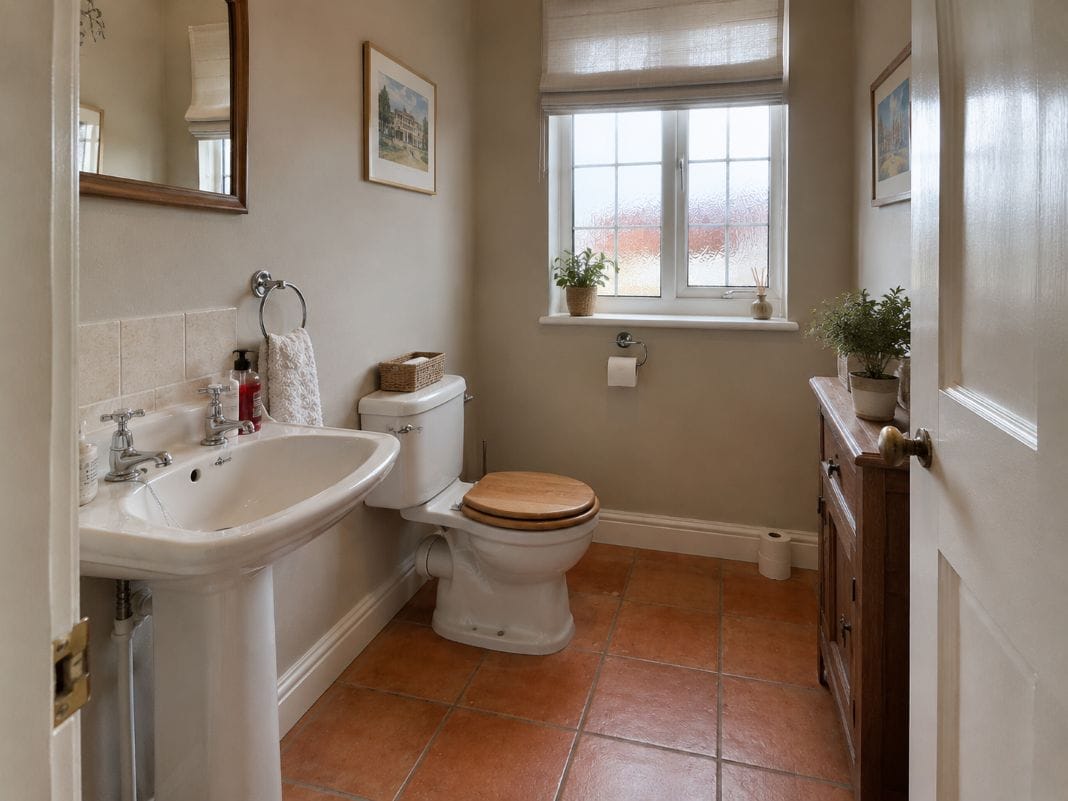
Quotes That Reassure vs. Costs That Spiral: What It Typically Costs in London
A low starting quote sounds reassuring, especially for a room this small.
The problem is that a downstairs toilet cost in London is rarely driven by room size alone. Labour rates are higher than in many other parts of the country, and access can be awkward even before work begins. A terrace with narrow hallways, limited storage space for materials and no side return can cost more to work in than a straightforward property with easier access.
Drainage has a major effect on WC installation price. If the new toilet sits close to existing services, the work may stay fairly contained. Once pipework has to travel further, floors may need opening up, boxing may need building in, and reinstatement starts to form a bigger part of the budget. Compact spaces also tend to increase labour time because every trade is working around tighter tolerances.
Finishes make a difference too. Basic sanitaryware keeps spend down, but many homeowners do not want a new cloakroom to look obviously secondary to the rest of the house. Tiling, joinery, taps, lighting and paint can shift the total well beyond the headline number that first drew attention.
Older London homes sometimes add another layer of cost through surprises uncovered during the work. Rotten flooring, outdated pipework, uneven walls or poor ventilation routes may not be clear at quotation stage. That is one reason staged, transparent pricing matters. Firms such as Compact Building Ltd are often valued for spelling out what is included, what sits outside scope, and where allowances may move.
The Federation of Master Builders and London cost indices both support the broader point that local conditions shape renovation budgets in ways online averages cannot fully capture. A realistic quote for a downstairs WC should separate core installation costs from variables such as drainage changes, structural opening-up, finishes and approvals. A very cheap figure can still be genuine, but only if the scope is equally small.
No pressure, no hard sell. Just practical advice from builders who do this every day across North London, Hertfordshire and the surrounding counties.
Book a Free ChatThe Illusion of “Quick Fix” vs. The Payoff of Managed Renovation
A quick fix aims to get a toilet in place fast. A managed renovation aims to make that toilet work properly with the rest of the house for years.
Rushed installations often look acceptable at first. Problems show up later in drainage performance, poor ventilation, awkward door clearances, patchy finishes or noisy soil pipes routed with little thought for daily use. In London housing stock, where compact plans and older structures leave less room for error, those compromises are harder to hide and more expensive to correct.
Managed work takes longer at the front because someone has to think through sequencing trades, access, materials, approvals and snagging before the room is finished. That planning can feel slower, yet it usually limits disruption once work starts. The Chartered Institute of Building has long reinforced the value of proper project oversight in construction, and the principle applies just as much to a small cloakroom as it does to a larger refurbishment.
Another difference lies in what happens after the installer leaves. Piecemeal work can leave a homeowner with a toilet that functions, but only after several follow-up visits for boxing, sealing, extractor adjustments or final making good. A professionally managed bathroom install tends to treat those details as part of the job, not as loose ends for later.
London renovation specialists, including Compact Building Ltd, often place the greatest emphasis on control rather than speed for exactly that reason. In a city full of tight corners, shared walls and period quirks, the cheaper path is often the one that has to be redone. The better long-term result usually comes from the approach that spends more time on drainage routes, ventilation, access and finish quality before anyone calls the room complete.