


What factors found during a kitchen site survey in London can change your renovation cost?
A pre-renovation site survey in London often reveals issues or limitations that were not visible during initial discussions. These findings can lead to revised quotes, typically reflecting adjustments for structural work, access challenges, outdated systems, or compliance upgrades. The survey helps translate early estimates into a realistic, fully scoped cost plan.
Pro Tip: If your property is leasehold or in a conservation area, prepare legal or landlord documentation before construction begins to avoid delays.
Petru Balbaie - Director at Compact Building Ltd
Why Site Surveys Matter in London Kitchen Renovations
In London, no two kitchen renovations are exactly alike. Even within the same postcode, homes of similar layout can present dramatically different renovation challenges. A site survey is the pivot point between assumption and reality. Estimates based purely on photographs or verbal descriptions often miss important details that directly affect time, cost, and feasibility.
Common issues uncovered during kitchen site surveys include:
- Uneven or sloping floors that require levelling
- Non-compliant plumbing or wiring
- Load-bearing walls not previously identified
- Poor ventilation or limited ducting options
- Difficult access for materials or trades
A survey is not simply about locating problems. It provides the groundwork for proper planning, reducing risk and avoiding mid-build changes. For London homeowners, where flats may be leasehold and period homes come with quirks, skipping or minimising this stage often leads to cost frustration later.
Before a site survey, you may receive a rough estimate based on standard conditions. After the survey, that estimate becomes a detailed quotation, backed by real on-site insight. This distinction frequently marks the difference between a project that stays on budget and one that does not.
Structural Surprises: When Your Walls, Floors or Ceilings Shift the Budget
Many London homes, particularly older terraces or conversions, contain hidden structural challenges. These often only come to light once walls are opened or measurements are taken in person.
Here are common structural discoveries that can affect a kitchen renovation quote:
- Wall removals requiring steel beams A wall assumed to be non-structural may turn out to carry load, requiring engineering and Building Control approval.
- Sagging or uneven floors Older homes often need floor levelling for cabinetry and appliances to sit flush. This adds labour and materials that are impossible to quote until surfaces are checked.
- Ceiling issues or hidden beam work Retrofitted ceilings may conceal previous poor work or moisture damage, requiring reinforcement or replacement.
Each of these impacts not just cost but also project sequencing. For example, structural reinforcement must precede joinery, which means schedules must shift accordingly.
Structural corrections are not always dramatic, but they are basic. Properly handled, they increase the long-term stability and safety of the project.
Pro Tip: During your site survey, request specific feedback on electrical load capacity to avoid future limits on appliances or lighting.
Petru Balbaie - Director at Compact Building Ltd
Plumbing and Electrical Realities in Older London Homes
Behind the plaster and under the floorboards, older housing stock often hides outdated plumbing and wiring. A kitchen renovation typically triggers a requirement to bring these systems up to current standards.
Common upgrades following a site survey include:
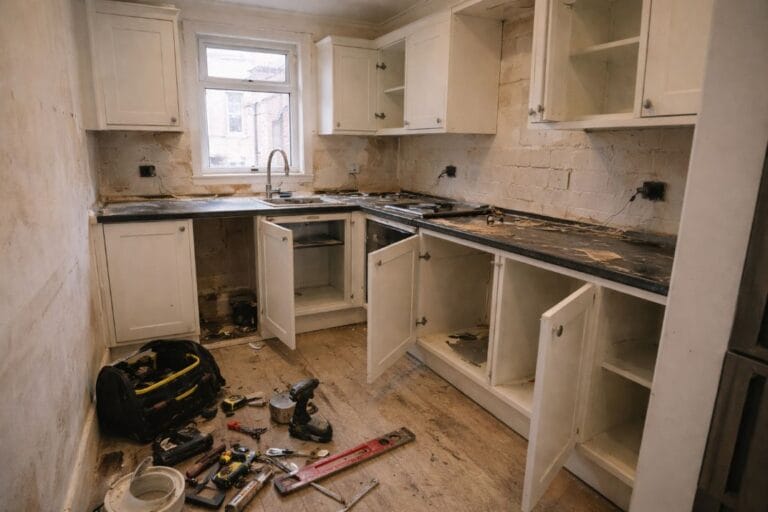
- Rewiring for modern kitchen loads Old electrics may not support induction hobs, integrated lighting or multiple appliances. This requires re-running cables and possibly upgrading fuse boards.
- Pipework adjustments or full replacements Ageing copper or lead piping may need to be replaced to manage water pressure or future-proof the space.
- Gas line relocation New layouts often clash with existing gas service locations. Safe, compliant repositioning is important.
- Earthing and bonding to modern standards Important for safety and compliance under Part P of the Building Regulations.
Bringing systems in line with today’s usage patterns is not an upgrade for its own sake. It is about safety, insurance validity and long-term performance. Compact Building commonly encounters these exact issues in London refurbishments, especially in flats or conversions where space and systems have been stretched over decades.
Access Constraints and Their Cost Implications
In central and suburban London, access is rarely simple. What looks like a minor renovation can escalate in cost simply because getting trades, materials, and waste in and out becomes complicated.
Some real-world access constraints include:
- Flats with narrow stairwells or no lift Carrying materials up multiple flights increases labour time and may require additional workers.
- Limited parking or timed delivery windows Controlled Zones, red routes, or permit-only streets often require careful coordination and add cost through permit purchases or delivery delays.
- Waste removal hurdles In some locations, skips are not permitted, adding challenge and cost to debris clearing.
- Access for large items like worktops or appliances Tight doorways or awkward turns may require lifting equipment or custom solutions.
Planned properly, these constraints can be accounted for. Unplanned, they disrupt schedules and stretch budgets. At Compact Building, these considerations are assessed during the initial site survey, with logistics built into the cost structure from the outset.
Get a Custom Renovation Plan
Material Choices That Shift After Seeing the Space
Initial material choices, often made in showrooms or from catalogues, can look and behave very differently inside the actual kitchen. Space, light, and layout all play a part in whether your selections work as intended.
Examples of post-survey material changes include:
- Flooring Textured tiles or solid planks may be unsuitable on uneven floors or where height differentials impact door clearances.
- Cabinet dimensions Wall imperfections or restricted access points sometimes necessitate shallower or custom-sized units.
- Worktops and splashbacks Selected finishes may not align well with obstructions, such as boxed-in pipework or irregular wall runs.
- Lighting-dependent finishes Gloss or pale colours often behave differently under low natural light, which can be assessed only on-site.
These adjustments are not design indulgences. They reflect technical compatibility and spatial harmony. A showroom choice that clashes with on-site realities can cause costly returns or installation challenges. Addressing this during the survey phase ensures that chosen materials integrate, not fight, with the kitchen’s realities.
Ventilation, Extraction and Compliance Upgrades
Ventilation is often overlooked until condensation streaks a newly painted wall or lingering odours sour the experience of a just-finished kitchen. In London flats and conversions where airflow is limited, effective extraction is especially important.
Survey-triggered interventions often include:
- Upgraded cooker extraction Building Regulations Part F requires effective removal of steam and grease from cooking zones. Ducting may need enlarging or rerouting.
- Condensation control Poor ventilation contributes to damp, mould and damage to finishes. Additional fan installation or window vents may be recommended.
- Vent placement and planning In flats or listed buildings, direct exterior venting may face restrictions, leading to the need for filtered systems or planning-neutral solutions.
- System integration Matching extractor performance with room size and cooking habits helps ensure compliance and comfort.
These needs often become clear only during a survey, where wall thickness, duct run possibilities, and structural obstructions can be physically examined. Preventing future problems through appropriate specification adds upfront cost but avoids long-term dissatisfaction.
Planning, Permissions and Party Wall Considerations
Not every kitchen renovation triggers regulatory hurdles, but in London, more do than many expect. During a site survey, clues about permission requirements often emerge, especially in flats, listed homes, or where walls are being changed.
Scenarios that may shift your project’s planning needs include:
- Structural changes requiring party wall agreements Altering shared structures like walls or floors may need notices under the Party Wall Act.
- Listed status or conservation restriction Even internal changes can be subject to control, particularly if cabinetry, windows or layouts affect heritage features.
- Leasehold constraints Flat owners often face requirements to inform freeholders or secure landlord consent.
- Previous unapproved changes A survey may reveal historical work that now needs retrospective permissions or affects what else can be done.
These regulatory factors introduce costs relating to permission applications, legal notices or planning drawings. More importantly, they impact timing. A delay in approvals can stall project start dates, affecting availability of trades and seasonal materials.
For homeowners in London, where property status varies block by block, proactive identification of these issues during the site survey provides valuable clarity. It allows for planned responses rather than rushed compromises.
Final Thought
A site survey is not a box-ticking exercise. It is the first serious step toward setting an accurate, deliverable cost for your kitchen renovation. In a city with such diverse housing and regulatory conditions, its value lies in shaping expectation to reality. A firm like Compact Building uses the survey phase to make renovation measurable, manageable, and properly planned from the outset.