


Why does underfloor heating stop working properly in London homes?
Underfloor heating can stop working for several reasons, including thermostat faults, electrical problems, pressure loss in water-based systems, and issues linked to flooring or insulation. In London homes, the cause is often shaped by the building itself, whether that means ageing wiring in a period property, compact room layouts in a flat, or floor finishes that affect heat transfer.
Cold mornings often reveal the first signs. A bathroom floor that used to warm up within a set time now feels slow. A kitchen may heat well near one end and stay cool near the other. In some homes, the thermostat lights up as usual, but the floor never seems to catch up.
Those patterns matter because underfloor heating problems do not always look dramatic at first. A full failure is obvious, but uneven heating, delayed response, and temperature fluctuations can point to faults developing in the background.
Common signs include:
- heating not turning on at all
- cold patches in the floor
- uneven floor temperature between parts of the same room
- thermostat not responding properly
- warming that feels much slower than usual
Older London housing types can make symptoms harder to read. In a Victorian terrace or converted flat, insulation levels, suspended timber floors, and room-by-room alterations can affect how heat is felt underfoot. In a newer flat, compact layouts and modern floor coverings may create a different issue, where the system works but warmth seems patchy because of furniture placement or heat loss into adjoining spaces.
Controls can also mislead. A thermostat that appears active may be calling for heat at the wrong time, reading the room incorrectly, or struggling with a sensor issue. Some homeowners understandably assume the whole system has failed when the problem sits in the heating controls instead.
Building Regulations Part L shape expectations around energy efficiency, yet regulation does not remove the practical differences between one property and the next. A system in a small, well-insulated flat will usually behave differently from one fitted into a retrofit ground floor in an older London house.
Early recognition gives you a clearer account of what is happening before a repair visit, which makes diagnosis more straightforward.
Common fault 1: thermostat and control issues
Controls are often the first place where trouble shows up. A thermostat problem can look very similar to a system fault, particularly if the screen is live but the floor stays cool.
One common scenario involves settings changing without much notice. Programmable controls can be altered by a power interruption, seasonal adjustment, or a simple button press. Smart thermostat issues add another layer, because app settings, schedules, and room sensors may conflict with what the homeowner expects the system to do.
Older digital thermostats and newer smart controls can both cause confusion, although the reasons differ. A legacy unit may suffer from age, loose connections, or poor calibration. A newer device may still be functioning, yet a misplaced sensor or incorrect programme can make the heating respond at the wrong times.
Typical signs and what they can indicate:
- The thermostat screen is blank, which may point to a power supply issue or flat batteries where relevant.
- The display works, but the heating does not start, which may suggest a controller fault, wiring issue, or sensor problem.
- The room feels warm, but the floor feels cold, which can happen if the system is reading air temperature rather than floor temperature in the way you expect.
- The heating comes on at odd times, which can be linked to programming errors or smart control settings.
Manufacturer guidelines usually explain how a control should behave, but they do not always account for the way real households use heating day to day. In family homes, settings are often adjusted over time, and the source of the problem can become unclear.
Sensor placement matters too. If a sensor is poorly positioned, the thermostat may think the room has already reached temperature. The result can feel like underfloor heating not working when the controller is actually receiving the wrong information from the system.
Control faults are often less invasive to diagnose than faults buried under the floor, which is one reason they are checked early during a proper inspection.
Boiler installations, underfloor heating, bathroom plumbing and full central heating systems.
Request a QuoteCommon fault 2: electrical and wiring problems
Electrical faults need careful handling. If an underfloor heating system stops altogether, trips a circuit, or works only intermittently, the issue may sit in the supply, the wiring, or a component linked to the control side of the system.
Period properties across London bring a particular set of concerns. Older wiring arrangements, piecemeal refurbishments, and years of alterations can leave hidden weak points behind walls or beneath floors. A recently renovated home can also present problems if later works affected cables, connections, or floor build-up around the heating system.
Tripped circuits and power loss
A circuit breaker that trips repeatedly should not be ignored. Underfloor heating electrical fault symptoms can include a sudden loss of heat, a dead thermostat, or heating that cuts in and out without warning.
Consumer units provide useful clues here, but they do not explain the cause on their own. A tripped breaker may reflect a fault in the heating circuit, damage to wiring, or another electrical issue elsewhere that affects the system.
Hidden cable damage
Electric underfloor heating relies on continuity through the heating element and associated wiring. If a cable has been damaged during flooring work, drilling, or later alterations, the floor may develop cold areas or fail completely in one zone.
That pattern often appears after changes to the room, including new floor finishes or joinery. A heating fuse blown or a circuit tripped after recent work deserves professional fault finding, especially where the timing seems more than coincidence.
Why safety comes first
Part P Electrical Safety rules exist for good reason. Testing electrical continuity and insulation resistance requires proper equipment and competent handling. NICEIC registered electricians and qualified heating specialists use those tests to narrow down faults without guesswork.
Once electrics are involved, a professional visit becomes the sensible next move, especially if the system has stopped entirely or the breaker will not stay on.
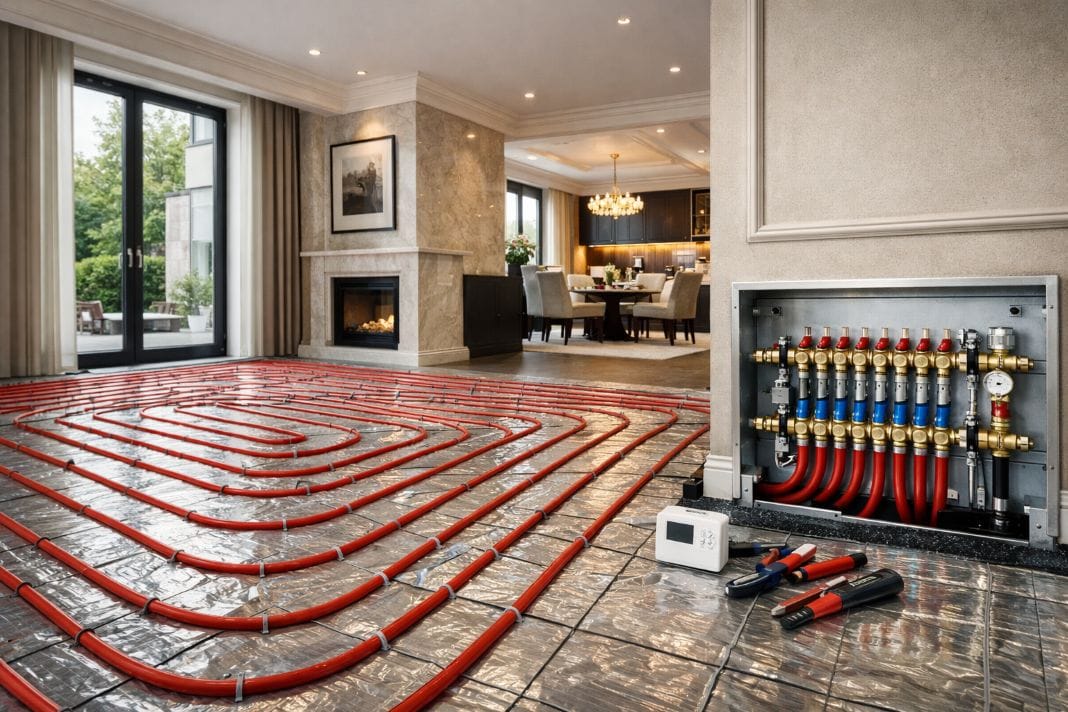
A thermostat placed away from direct sunlight and draughts will give a much more accurate reading.
Common fault 3: water-based system issues
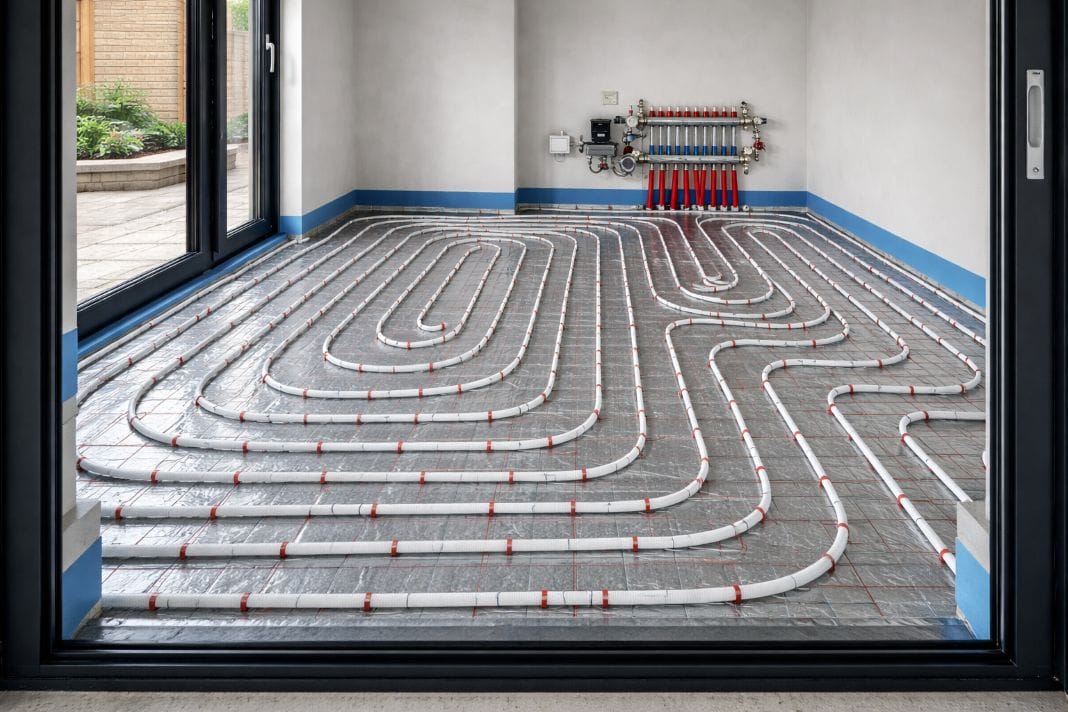
A water-based underfloor heating system can behave a bit like a radiator circuit with problems hidden from view. Heat may fade gradually, one area may stay cooler than the rest, or the system may seem sluggish even though the boiler and controls appear normal.
Leaks, airlocks, and pressure drops are common themes in wet underfloor heating faults. None of them always produces an obvious sign on the floor surface, which is why these issues can linger before anyone realises what is happening.
A leak under a finished floor may not announce itself with visible water. Instead, you may notice pressure loss, rooms that never quite reach temperature, or heating that works less effectively over time. In flats and some larger buildings, shared systems and Building Management Systems can make the source of a pressure problem less obvious to the individual homeowner.
Air in the system creates a different sort of symptom. Much like a radiator with trapped air, parts of the floor may remain cool because water is not circulating evenly through the pipework. The heating may still run, but the warmth feels patchy or delayed.
Signs often linked to water-based underfloor heating problems include:
- a system pressure drop on the gauge
- areas of floor that stay colder than nearby sections
- longer warm-up times than usual
- repeated need for attention after topping up or resetting elsewhere in the heating system
Pressure gauges and expansion vessels are part of the wider picture here. If pressure keeps falling, a proper inspection may involve pressure testing, leak detection, and pipework assessment to identify whether the issue lies in the underfloor circuit itself or elsewhere in the heating setup.
Communal or shared heating arrangements in London blocks can complicate matters further. A homeowner may assume the underfloor heating leak sits within their own floor when the real problem relates to pressure conditions higher up the chain.
Regular servicing can pick up early warning signs before comfort drops sharply in the middle of winter, particularly in homes where the system forms part of a broader renovation.
Common fault 4: flooring and insulation problems
Many homeowners assume a weak-performing system must have a mechanical fault. In practice, the floor construction above and below the heating can affect comfort just as much as the heating hardware itself.
London homes are especially prone to this issue because floor structures vary so widely. A converted flat with one type of subfloor, a ground-floor maisonette with another, and a period terrace with suspended timber all present different retrofit challenges.
New floor finishes can change performance in ways that feel like a breakdown. Thick carpet, certain underlays, and some engineered boards introduce more thermal resistance than tile or stone. The heating may still be working, but the warmth takes longer to come through.
Insulation matters just as much. If too much heat escapes downward into the subfloor, the system has to work harder to warm the room above. In older properties, poor insulation standards or awkward floor build-up can leave homeowners dealing with heat loss through the floor rather than a failed system.
Common pitfalls include:
- floor coverings that reduce heat transfer
- underlays that are unsuitable for underfloor heating
- limited insulation beneath a retrofit installation
- assumptions that any change in floor finish will have no effect on output
Building Regulations Part L set standards around energy performance, but older homes and inherited renovations do not always line up neatly with current expectations. A floor that was acceptable for one heating arrangement may perform poorly with another.
This is one area where the whole assembly matters. Heating pipes or mats, insulation, adhesive layers, screed depth, and floor finish all influence the result you feel in the room, especially in compact London layouts where every surface plays a role.
Recent flooring changes can affect heat output even if the heating system itself is in perfect condition.
When to call for a professional repair in London
A few odd heating cycles after a power cut may not point to a major fault. Repeated cold patches, a thermostat that will not respond, or a system that trips electrics certainly moves things into professional territory.
London homes add practical pressures to that decision. Access can be tight, floor finishes may be expensive to lift, and communal systems in flats can blur the line between a private fault and a wider building issue. Waiting too long can also affect neighbouring spaces if moisture or pressure problems are involved.
Use these decision points as a guide:
- Call for a professional underfloor heating service if the heating is not turning on at all after normal control checks.
- Arrange an inspection if circuit breakers trip, fuses blow, or the system cuts out intermittently.
- Book a repair visit if a water-based system keeps losing pressure or develops clear cold zones.
- Seek help if new flooring has been laid and performance changes sharply afterwards.
- Involve a qualified engineer if the property has a complex setup, including communal heating or multiple control zones.
A professional assessment usually starts with symptom review, control checks, and testing suited to the type of system in place. Electric systems may need electrical fault finding. Wet systems may need pressure testing, circulation checks, and inspection of manifolds, gauges, or connected heating components. For gas-linked systems, any related work should involve someone appropriately registered, including Gas Safe registered engineers where relevant.
In London, firms such as Compact Building Ltd are often valued for coordinating that broader picture in renovation-led homes, where heating faults may overlap with flooring, layout, plumbing, and access constraints.
Our plumbers work alongside the rest of the build team so everything is coordinated properly.
Speak to UsThe realities of underfloor heating in London: what homeowners often overlook
Underfloor heating in London homes rarely sits in a simple, standard setting. It exists inside period houses with uneven floors, flats with layered renovations, extensions joined onto older structures, and compact rooms where furniture and floor finish affect how warmth is felt day to day.
Property age shapes performance
Heating challenges in period properties often come from the building fabric as much as the system itself. Older subfloors, inherited insulation gaps, and listed or sensitive elements can all limit what the system can achieve without wider upgrades. Historic England guidance and local building control requirements can also influence what changes are practical in some homes.
Good installations still need attention over time
A well-installed system can still develop faults years later. Controls age, wiring can be disturbed during unrelated works, pressure conditions shift, and floor finishes change. Long-term heating maintenance is part of owning the system, particularly where the installation forms part of a broader refurbishment.
Expectations matter
Underfloor heating usually gives a gentler, steadier form of warmth than some homeowners expect, especially after living with radiators. In a London flat with limited floor area, or in a ground floor retrofit with structural limits, comfort depends on design, insulation, and use patterns as well as the heating itself.
That wider view tends to separate a genuine repair issue from a mismatch between the home, the floor build-up, and the expected result. Companies used to managing renovations in London, including Compact Building Ltd, tend to approach those cases as part of the whole property rather than as an isolated heating fault.
A calm assessment of the controls, the system type, and the building around it usually leads to a clearer answer than assumptions made on a cold morning.