

What are the best Japandi kitchen ideas for a calm and functional home?
Japandi kitchens blend Japanese minimalism with Scandinavian practicality. This creates peaceful, well organised spaces. This guide shares seven ideas to help UK homeowners introduce Japandi style into their kitchens. These include natural wood, neutral palettes, functional lighting, and layout changes that improve both look and flow.
Pro Tip: Always test wall colours in your kitchen’s natural light before painting anything permanent.
Petru Balbaie - Director at Compact Building Ltd
1.Use Warm Wood Cabinets for Natural Japandi Texture
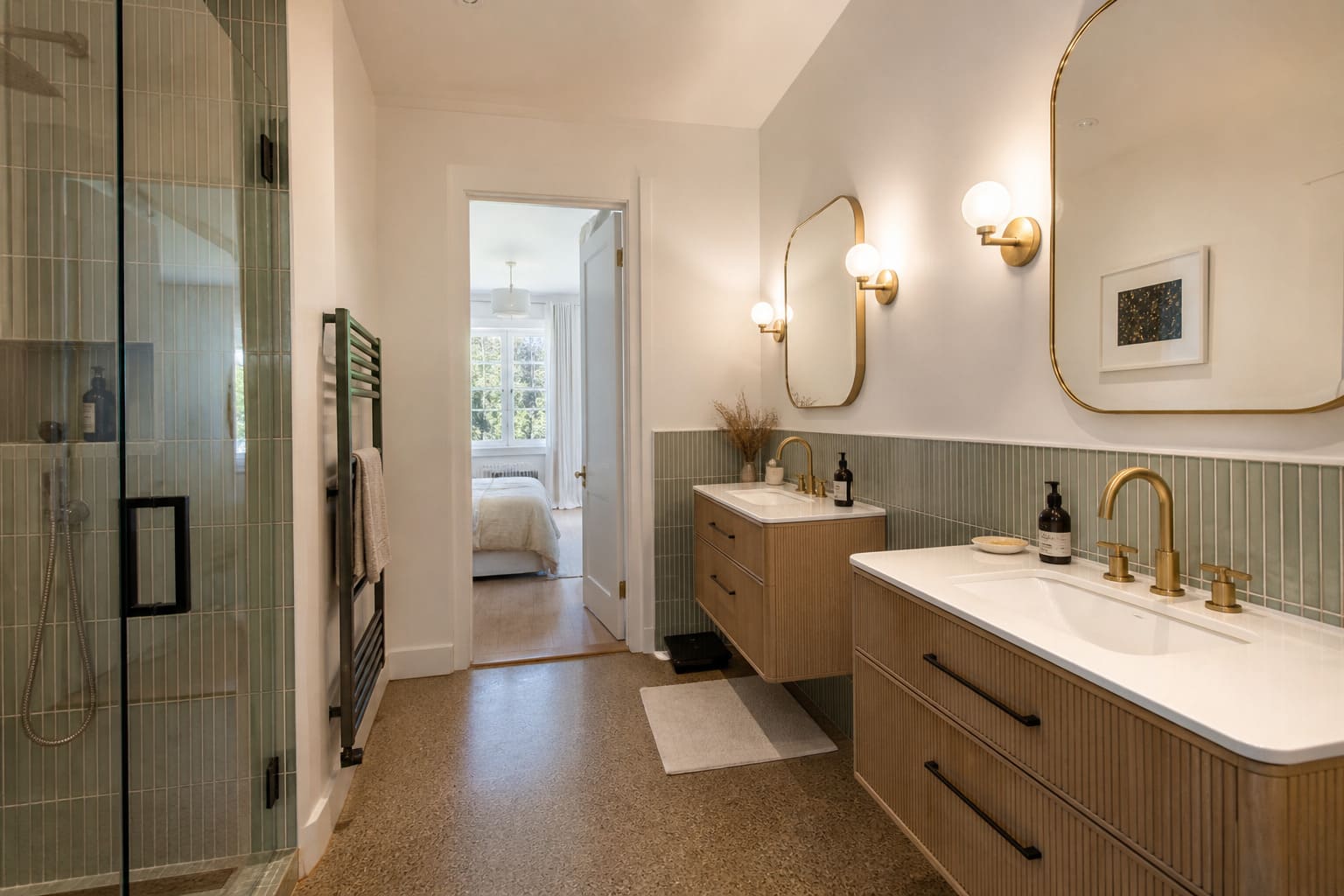
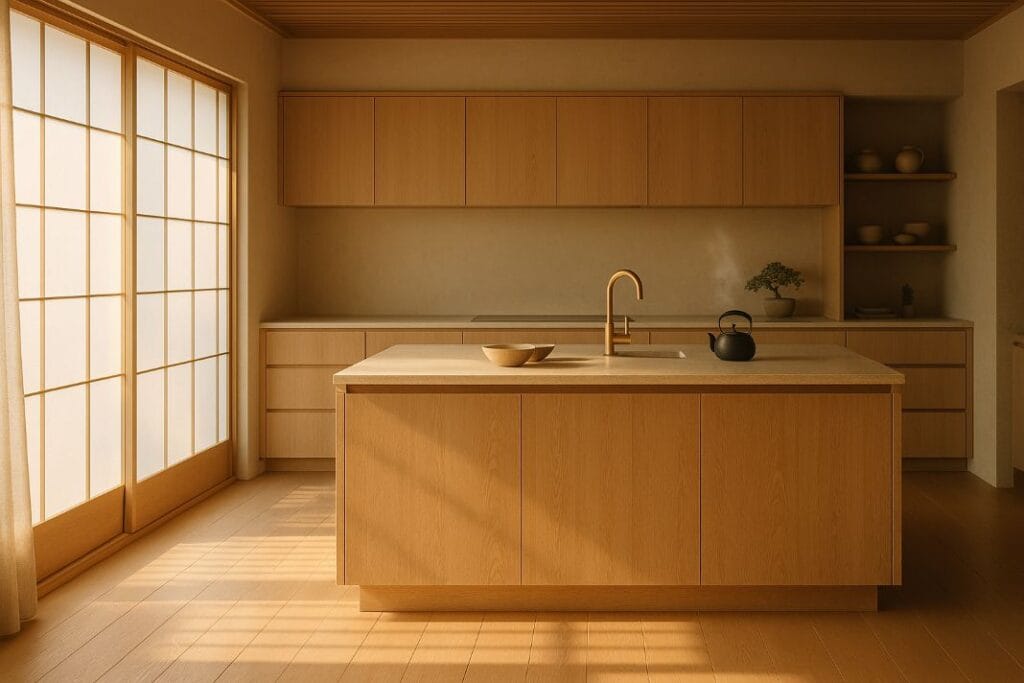
Warm wood gives a kitchen a sense of calm and character. Oak, walnut, and bamboo are all ideal for Japandi design. These offer distinct natural timber kitchen UK tones and visible grain. Pair them with matte black or off white worktops to create elegant contrast.
Flat fronted doors keep the look simple. Simplified shaker styles also work when kept understated. Finishes such as raw, oiled, or matte lacquer preserve the tactile feel of the wood. Avoid high gloss surfaces or red toned timbers. These often clash with the aesthetic.
Japandi Mistake to Avoid: Using high shine wood cabinets with ornate handles. Go for flat, matte textures and minimalist fittings.
Japandi Material Guide:
✓ Warm-toned oak
✓ Reclaimed wood
✓ Handmade ceramic tiles
✓ Honed or matte-finish stone
✗ Glossy or red-toned woods
2.Incorporate Open Shelving to Showcase Simplicity
Japandi shelving ideas focus on function and clarity. Open shelving lets you display everyday items like neutral toned crockery, soft ceramics, and stoneware.
Use reclaimed timber or floating shelves for a grounded look. Arrange items in odd numbered groupings and keep tones consistent. Avoid cluttering the shelves. Japandi design values balance.
Japandi Mistake to Avoid: Overloading open shelving with colourful or mismatched decor. Keep it simple and tonal.
Compact Building installs shelving and recommends materials that suit a minimalist shelving UK aesthetic. Their open shelf kitchen layout guidance helps you keep things both stylish and practical.
3.Layer Lighting to Build a Tranquil Mood
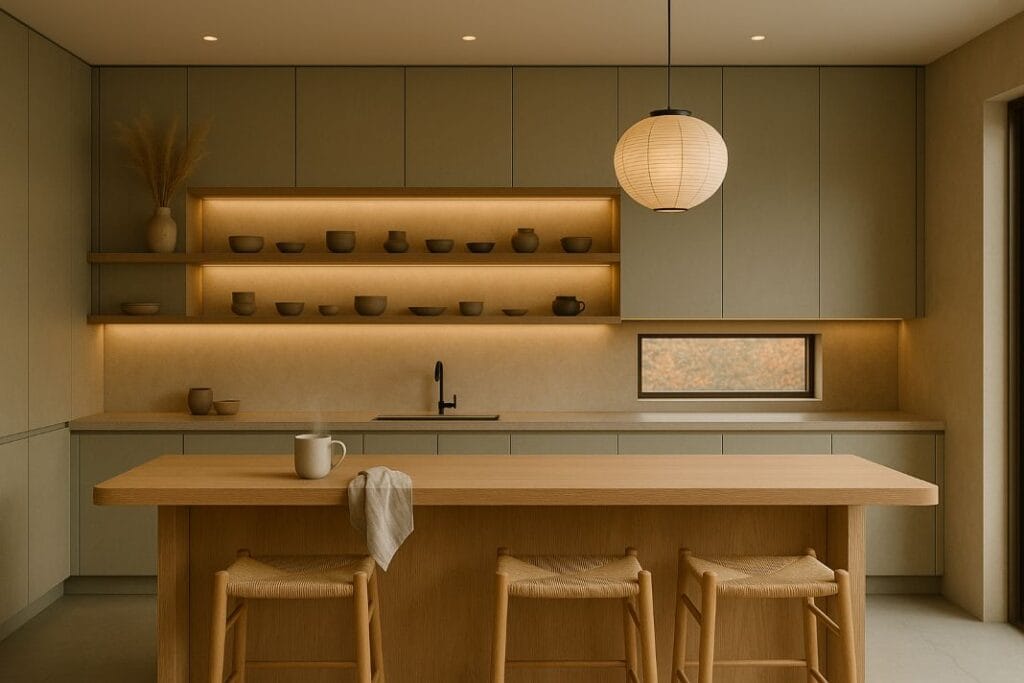
Japandi lighting kitchen design balances mood and purpose. Lighting should be soft, layered, and easy to live with.
- Pendant light minimalist designs add warmth above tables or islands
- Under cabinet lighting offers subtle task lighting
- Choose bulbs with warm tones, not bright white
Japandi Lighting Scenario: In a narrow kitchen with slate worktops and oak shelving, soft LED strips highlight textures. A woven shade pendant adds warmth over the dining table.
This layered approach supports natural rhythm and a relaxed feel. Compact Building helps plan and install soft kitchen lighting using products from top UK brands.
4.Go Handleless for Seamless Minimalist Appeal
Handleless kitchen ideas create a clean look. Removing hardware reduces visual noise and keeps things flowing. Japandi kitchens benefit from this smooth, simple feel.
Choose push to open units or ones with discreet groove handles. Stick with matte finishes or natural materials like birch plywood. Avoid chrome or shiny details. These break the visual calm.
Japandi Mistake to Avoid: Fitting glossy cabinets with oversized chrome handles. Use groove designs and muted finishes instead.
Upgrade Your Kitchen Layout
Pro Tip: Use under cabinet lighting with warm bulbs to keep prep zones useful but cosy.
Petru Balbaie - Director at Compact Building Ltd
5.Stick to a Neutral Earth Tone Colour Palette
Japandi colour palette ideas focus on calm tones. These include sage, clay, mushroom, and stone. These muted shades work well in compact UK kitchens.
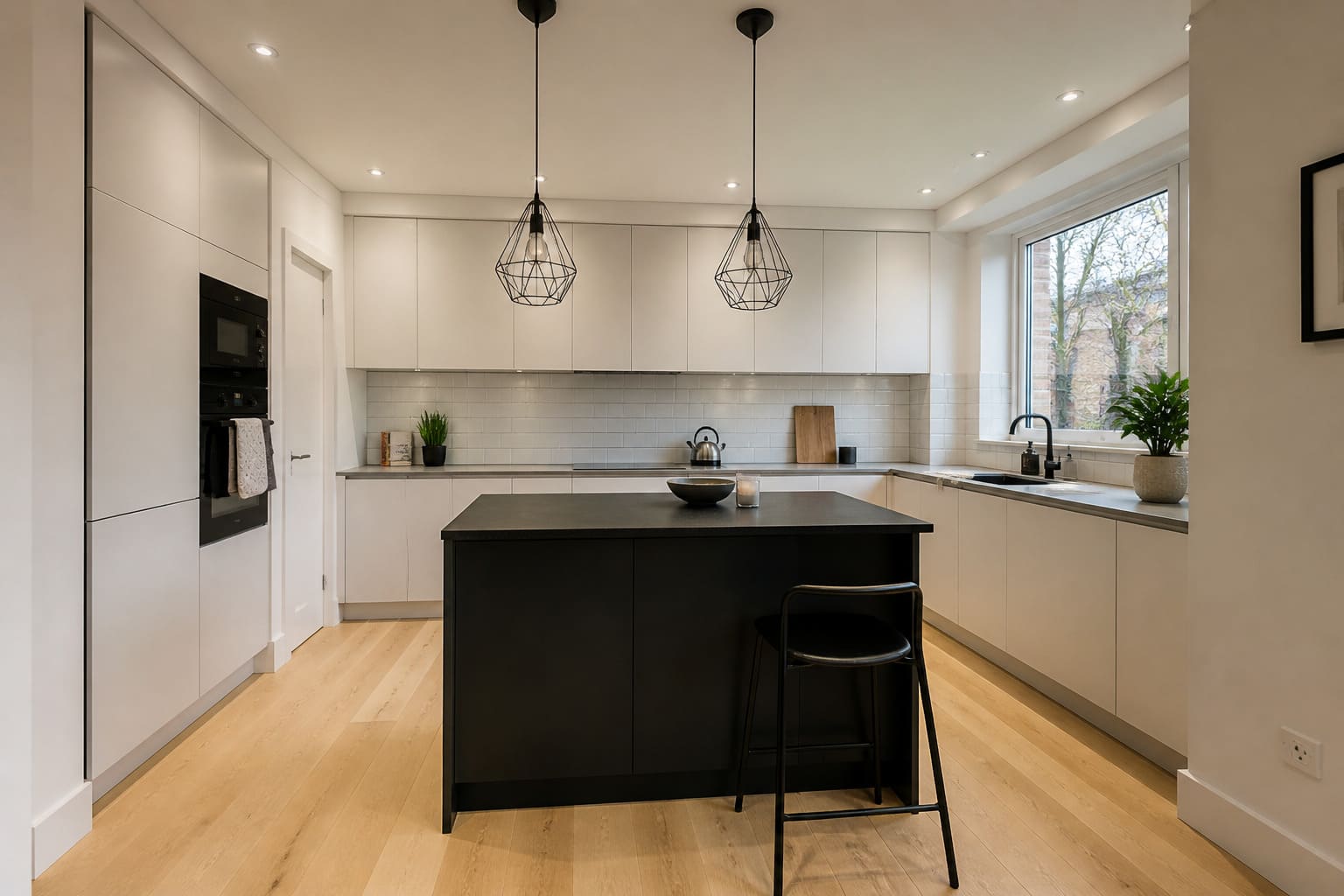
Mix warm and cool tones to add depth. Use darker shades like charcoal on islands or base units to anchor the room. Earth tone kitchen design adds subtle interest without overpowering.
Compact Building helps with paint choices using quality brands like Farrow & Ball and Little Greene. They offer guidance on decorating and paint safe options for cabinetry. The goal is to achieve a muted kitchen palette that feels grounded and cohesive.
6.Add Texture with Stone, Ceramic or Matte Finishes
Japandi kitchens rely on texture for visual interest. Combining stone, ceramic, and matte finishes keeps the space from feeling flat.
Use materials like honed slate, handmade tiles, or microcement. Matte effect laminates and textured vinyls offer budget options with a tactile look.
Japandi Mistake to Avoid: Overusing smooth or shiny finishes. Aim for contrast. Rough stone next to smooth oak works beautifully.
7.Embrace Functional Flow in Layout and Zoning
Japandi kitchen layout planning supports easy movement. Zoning helps you move smoothly through prep, cooking, and cleaning areas.
Use the classic triangle layout or a linear flow for smaller kitchens. Pull out pantries, corner drawers, and lighting can define zones.
Japandi Mistake to Avoid: Leaving parts of the kitchen underused. Zoning helps every part serve a purpose.
Compact Building can adapt layouts for compact kitchen ideas and improve functional kitchen flow. They also offer clear kitchen zoning tips to help you make the most of every square inch.
Bring Japandi Calm to Your Compact Kitchen
Small changes can bring calm to your kitchen. Try open shelving, better lighting, or a new cabinet colour to see the difference.
Quick Budget Friendly Japandi Upgrades
- Swap shiny handles for matte or timber ones• Paint in a soft earth tone
- Add one open shelf
- Use soft white bulbs instead of bright LEDs
Kitchen Maintenance Tip: Pick finishes that age well. Oiled wood and matte tiles wear better and hide everyday marks.
Q: Can Japandi work in a small galley kitchen?
A: Yes. Reduce clutter and keep movement simple.
Q: Do Japandi colours suit north facing kitchens?
A: They do. Warmer tones like clay and mushroom help balance cooler light.
Q: Is Japandi too plain for families?
A: No. With soft textures and good lighting, it can feel lived in and welcoming.