


What are the biggest bathroom renovation mistakes London homeowners should avoid?
Renovating a bathroom in London presents challenges that aren’t always obvious at first. Space is tight, infrastructure is old, and legal rules can catch you off guard. If you start with a clear plan and avoid common missteps, your renovation will be smoother, quicker, and more successful.
Pro Tip: Always check whether your renovation needs building control approval before starting.
Petru Balbaie - Director at Compact Building Ltd
Why Bathroom Renovations in London Need a Different Approach
Upgrading a bathroom in a London flat can feel like trying to fit a spa into a wardrobe. The problems go beyond appearances. Old pipes, tight delivery access, and shared walls make everything harder than expected.
Many homes in the city were built before modern plumbing standards existed. Tight hallways and limited work hours, especially in listed or leasehold buildings, create further restrictions. If you’ve ever struggled to find parking for a delivery van or been told you need a party wall agreement, you know this isn’t like renovating elsewhere.
Many older flats also suffer from low water pressure, and pipe compatibility issues often arise when connecting new fixtures to legacy systems. To stay ahead, you must plan realistically, prepare for delays, and check every regulation early. That is the best way to protect your time and budget.
Planning Failures That Set You Up for Disaster
Plenty of homeowners begin with enthusiasm, only to hit problems in the first week. They buy fittings that don’t fit, underestimate plumbing needs, or forget to book fitters early. This approach quickly leads to overspending and delays.
Many people rely on showroom layouts without checking their own measurements. A budget without a 10 to 15 percent buffer almost always ends in regret. Skilled tradespeople are often booked months in advance, and without them, your project may stall.
Before work begins, check whether your project needs planning permission or building control approval, especially if layout changes affect plumbing or structure.
Instead of rushing, take detailed measurements, confirm that your pipework suits your layout, and get your team lined up before spending a penny. The planning phase acts as a safeguard that protects you from rushed mistakes later.

Layout Mistakes That Ruin Small or Awkward Spaces
In a small London bathroom, poor layout quickly becomes a daily irritation. A mirror that blocks light, a door that hits the toilet, or a basin squeezed too close to a drawer makes even a beautiful space feel uncomfortable.
The most common issues include toilets directly in view of open doors, towel rails jammed against furniture, and basins installed without enough room to stand or use storage.
To solve this, map your space digitally or use scale drawings. Consider how light moves and how doors open. Design for the way you use the bathroom, not just for visual appeal.
Compact Building often sees layout issues caused by poor planning, especially in London flats where space is limited.
Bad vs. Good Layout Example
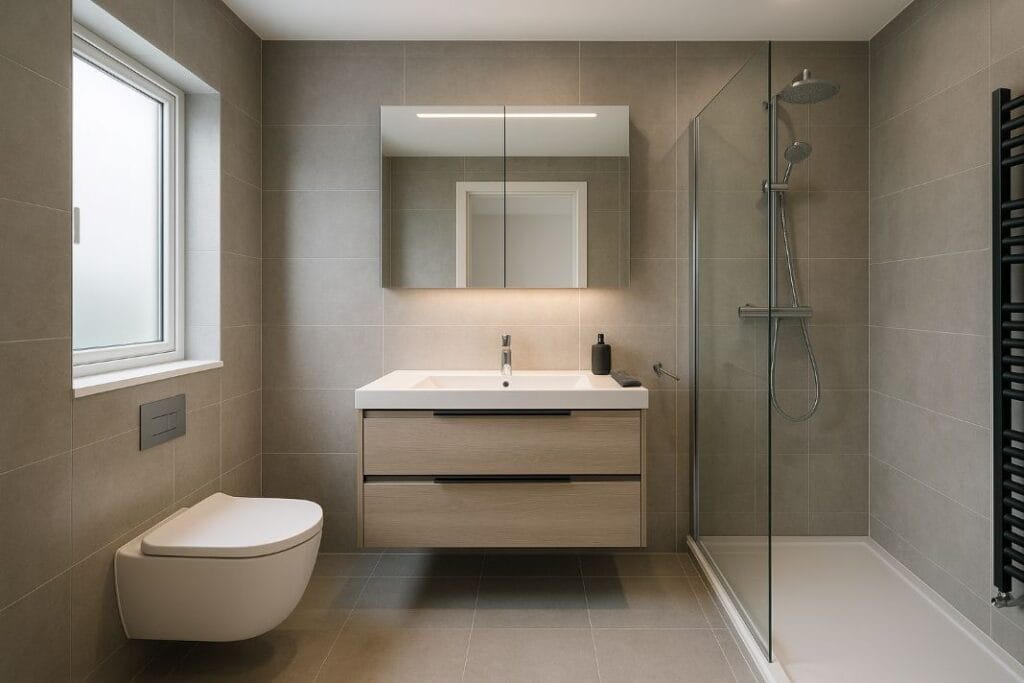
A bad layout places the toilet in full view from the hallway, leaves drawers blocked by a poorly positioned towel rail, and installs a mirror that covers the only window. A good layout hides the toilet from direct sight, places rails with adequate clearance, and uses mirrors to natural light.
Ignoring Moisture, Ventilation and Shared Wall Realities
Moisture damage doesn’t show up straight away, but it accumulates quickly. Steam that lingers, grout that cracks, or paint that peels may seem minor, but they are early signs of a ventilation failure.
Cheap fans, missing waterproof layers, or low-quality sealing allow damp to travel behind walls and under floors. In shared buildings, this often leads to neighbour complaints and insurance claims.
Ventilation rules matter. Use fans rated for at least 15 litres per second. Install membranes behind tiles. Choose moisture-resistant paint. A small investment in airflow saves thousands in future repairs.
Pro Tip: Use digital layout tools to test door swings and clearance zones before purchasing fixtures.
Petru Balbaie - Director at Compact Building Ltd
Book Your Free London Bathroom Consultation
Choosing the Wrong Materials or Cutting Corners on Craftsmanship
A bathroom can look perfect at first and still fail within weeks. Cheap silicone, MDF cabinets, and unsealed edges lead to early deterioration. Water always finds the weak spots.
Use materials made for wet environments such as backer boards instead of plasterboard, IP-rated lights, and sanitary-grade sealants. Pay attention to finishes. If tiles are not level or if sealant gaps are visible, the bathroom will not hold up.
Good materials and skilled work produce lasting results. You will notice the difference six months later when everything still looks and works as it should.
Overlooking Legal Rules and Hiring the Wrong Tradesperson
Regulations are not just paperwork. They exist to stop things from going wrong. When homeowners ignore them or hire someone without proper qualifications, problems quickly multiply.
You need Part P compliance for electrical work and Part G for plumbing. Without these, insurance claims may be rejected. A tradesperson without registration or insurance puts your home and finances at risk.
Top 3 Signs of a Rogue Fitter
- Won’t provide a written quote.
- Demands large cash payments upfront.
- Refuses to show certification or insurance.
Always check credentials and get everything in writing. If they resist, choose someone else.
What London Fitters Actually See Go Wrong – Advice from Compact Building
Fitters who work across London see clear patterns. Most call-backs come from small mistakes that were easily preventable: damp behind tiles, bowed floors from poor preparation, and silicone that failed because it was not applied correctly.
Top 3 Mistakes Homeowners Often Make
- Buying fittings before confirming measurements.
- Tiling over un-primed or flaky surfaces.
- Hiring trades based on price alone without checking credentials.
Lessons from Their Experience
- Always check your floor is level before installing trays.
- Prime walls before applying tanking systems.
- Replace flexing subfloors rather than tiling over soft spots.
The best fitters fix issues before they become visible. Their insight can prevent major rework later
Bathroom Renovation Checklist for London Homes
You can have peace of mind if you prepare properly and hire people who know what they are doing. A well-planned renovation looks good but also holds up to everyday use.
Your Smart Renovation Checklist
- Confirm leasehold rules and obtain necessary permissions.
- Review your local council’s renovation guidelines.
- Hire certified professionals with proven references.
- Include ventilation, damp proofing, and water safety in your plans.
- Arrange access for deliveries and waste collection.
- Determine if your project requires building control approval or planning permission.
A Realistic Renovation Timeline
- Week 1 to 2: Planning, permissions, and layout design.
- Week 3 to 4: Order materials and confirm trades schedules.
- Week 5 to 7: Fitting and installation.
- Week 8: Snagging, sealing, and final cleaning.
Aftercare Tips to Make It Last
- Run your extractor fan for 15 to 20 minutes after each shower.
- Inspect seals and grout annually.
- Reseal tiles and replace worn silicone as needed.
- Clean vents regularly to maintain airflow.
If you are renovating a flat in London, working with the right experts from the beginning makes the process smoother. Compact Building supports London homeowners who want to get it right the first time. Their team understands what city flats require and how to avoid costly errors.
When you plan carefully, hire trusted professionals, and focus on quality, your renovation becomes a long-term improvement rather than a short-term fix.