



Why does a boiler keep losing pressure in a London home?
A boiler usually loses pressure because water is escaping somewhere in the heating system, a safety component is not working properly, recent maintenance has altered the system balance, or the pressure reading itself is inaccurate. In London homes, older pipework, compact layouts, hidden services and mixed property types can make the cause less obvious, which is why steady monitoring and a proper professional diagnosis matter.
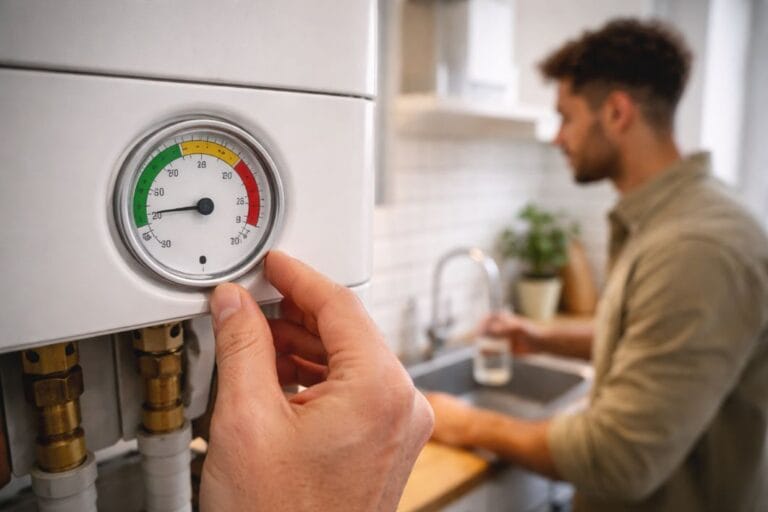
Pro Tip: Take a photo of your boiler’s pressure gauge before and after topping up, so you can track minor changes and spot unusual drops more easily.
Petru Balbaie - Director at Compact Building Ltd
Understanding boiler pressure in London homes
Boiler pressure is a simple reading with an important job. It shows whether your central heating system has enough water circulation to work properly and safely. If the pressure drops too low, the boiler may stop heating or shut itself down through safety cut-offs.
A useful way to think about it is like blood pressure for your heating system. The number does not tell the whole story, but it often signals whether something is wrong underneath.
Typical pressure readings often look like this:
- Around 1 to 1.5 bar when the system is cold is commonly treated as normal in many homes
- A higher reading when the heating is on can be normal within the manufacturer’s guidance
- A reading that keeps falling back after top-up usually points to an underlying fault
London housing complicates the picture a little. A flat with shorter pipe runs may behave differently from a tall Victorian terrace with radiators across several floors. Older homes can also have a history of alterations, which means pressure readings need to be viewed in the context of the whole system, not as a single isolated number.
Confusion often starts with the idea that one pressure reading suits every property. Boiler manufacturers, pressure gauges and heating engineers all work from the specifics of the system in front of them, and building regulations shape how that system should be installed and maintained.
Common cause #1: Leaks in the heating system
Small leaks are one of the most common reasons a boiler keeps losing pressure. The trouble is that they are often hard to spot, especially in London homes where pipework may run under floors, behind kitchen units or through boxed-in service areas.
Signs can be subtle:
- damp patches near skirting boards or around ceilings below bathrooms
- staining near radiator valves or pipe joints
- repeated pressure drops with no obvious boiler fault
- a need to top up pressure more often than before
A slow radiator leak may leave only a faint mark on flooring or a little corrosion at a valve. In a period property, age alone can make seals, joints and older sections of pipework more vulnerable. Recent renovation work can also play a part if existing pipework has been disturbed, capped, extended or reconnected.
Some homeowners assume that no visible drip means no leak exists. That is not always the case. Water can escape in tiny amounts over time, and the pressure reading may show the problem before the eye does. In London terraces and flats, where access is tighter and services are often concealed, hidden leaks are a familiar reason for pressure loss.
If pressure keeps dropping and there are signs of damp, staining or corrosion, a registered professional should assess the system. A proper inspection is usually far more useful than guessing which section has failed.
Pro Tip: If you spot damp patches near hidden pipe routes, note their location and timing, as this can help engineers pinpoint slow leaks faster.
Petru Balbaie - Director at Compact Building Ltd
Common cause #2: Faulty pressure relief valve
The pressure relief valve is a safety part that protects the boiler and heating system if pressure gets too high. It works a bit like the safety release on a pressure cooker. When needed, it allows excess pressure to vent rather than build up dangerously.
Problems begin when that valve does not seal properly after opening, or when it starts venting when it should not. In those cases, the system can lose water and the pressure may continue to fall.
Common signs of a pressure relief valve problem include:
- water discharging outside through the relief pipe
- pressure that drops after the heating has been on
- repeated loss of pressure even after the system has been refilled
- signs that another fault has caused pressure spikes and stressed the valve
Urban water conditions can add to the confusion. Pressure fluctuations in the incoming supply, combined with normal heating cycles, may place extra strain on components over time. That does not mean London water pressure directly causes every valve fault, but it can make diagnosis less straightforward.
Because the valve is a safety component, this is a job for a Gas Safe Register engineer rather than a homeowner. A proper assessment can separate a valve fault from other issues that produce similar symptoms, such as expansion vessel problems or a genuine leak elsewhere.
Common cause #3: Bleeding radiators or recent system work
Pressure loss sometimes appears straight after ordinary maintenance. If radiators have been bled, air has been removed from the system, and that process can lower the water pressure. The same can happen after plumbing work, radiator replacement or wider renovation activity.
The sequence is usually simple:
- Air or water is released from the system during maintenance.
- The pressure reading drops afterwards.
- The system may need to be returned to the correct range.
In a multi-storey London house, the effect can feel more noticeable because heating systems often cover several levels, and any imbalance becomes easier to spot in the top-floor radiators first. A compact flat can also show pressure changes quickly because the system volume is smaller.
Most of the time, this is a manageable explanation rather than a sign of serious failure. Trouble starts when the pressure continues to fall days later, or when topping up becomes a repeated routine rather than a one-off after maintenance. In that case, bleeding radiators may have revealed an existing weakness rather than caused the whole problem.
Request a Quote for Boiler Repairs
Common cause #4: Expansion vessel issues
An expansion vessel helps the heating system cope with the natural rise and fall in pressure as water heats up and cools down. A simple analogy is a shock absorber that softens pressure changes before they become a problem.
When the vessel is not working properly, pressure can rise too much during heating and then drop back sharply once the system cools. Homeowners often notice the pattern without knowing the part behind it.
Typical signs include:
- pressure rising quickly when the heating comes on
- pressure dropping low once the system cools
- repeated need to refill the system
- symptoms that seem to mimic a leak or faulty valve
This fault can be overlooked in London homes with limited space around the boiler or a long history of piecemeal updates. In some compact properties, boilers are fitted into cupboards or tight service zones, so hidden components receive less attention until the pressure pattern becomes hard to ignore.
Correct sizing, proper installation and ongoing servicing all matter here. A vessel problem is rarely something a homeowner can identify with confidence from the gauge alone, because the behaviour can overlap with several other faults.
Common cause #5: Faulty pressure sensor or gauge
Sometimes the pressure problem is not a true loss of water at all. The reading may be wrong because the pressure sensor or gauge is faulty.
A car fuel gauge gives a familiar comparison. If it says the tank is nearly empty when it is not, the reading changes your decisions even though the fuel level has stayed the same. Boiler sensors can create the same kind of confusion.
A few clues may point in that direction:
- The reading changes suddenly without any matching change in heating performance.
- The boiler behaves normally despite a gauge that appears unusually low or erratic.
- Previous top-ups or checks have not matched what the display seems to show.
Misdiagnosis can send a homeowner looking for leaks or failed components that are not there. That can lead to wasted time, unnecessary worry and work that does not solve the issue. Annual servicing is useful partly because an experienced heating engineer can compare the reading, the boiler behaviour and the wider system condition before drawing conclusions.
When to seek professional help in London?
Some pressure loss is straightforward to spot, but repeated or unexplained drops deserve proper attention. London homes often include hidden pipe runs, constrained boiler locations, older layouts and neighbour-sensitive working conditions, all of which make self-diagnosis less reliable.
It is sensible to call a certified heating engineer if:
- the boiler keeps losing pressure after refilling
- you can see signs of water discharge, damp or corrosion
- the pressure falls alongside poor heating performance
- recent maintenance has been followed by continued instability
- the issue involves a safety part such as the pressure relief valve
A professional visit typically includes checking the boiler reading, looking for visible leaks, assessing system behaviour during operation and reviewing likely fault points. Gas Safe Register status matters for boiler work, and firms such as Compact Building Ltd operate in the kind of London housing stock where access, age and previous alterations often shape the diagnosis as much as the boiler itself.
Delaying too long can turn a manageable repair into wider water damage, interrupted heating or repeated call-outs during colder weather.
Boiler pressure loss in London: what homeowners often overlook
Pressure loss rarely exists in isolation. In London, the age of the property, the way past work has been carried out and the physical limits of the home often influence what happens next.
A few overlooked factors come up again and again:
- original pipework hidden behind later refurbishments
- loft conversions or extensions that alter system balance
- tight service spaces that make faults harder to inspect
- assumptions that a quick top-up solves the root cause
Many homeowners focus on the boiler itself and forget that central heating is a whole-system issue. Radiators, valves, pipe joints, sensors and safety components all affect pressure readings. Building regulations and manufacturer guidance also shape what a safe, compliant repair should look like.
Pressure loss is best treated as a sign to pay attention, not as a reason to panic. In a London home, that steady approach usually leads to the right fix faster than repeated topping up and hopeful waiting.