



When is it better to replace a boiler instead of repairing it?
Replacing a boiler usually makes more sense when it is older, breaks down often, has costly or hard-to-source parts, or raises safety and efficiency concerns. In London homes, the decision also depends on property type, access, regulations, and whether the wider heating system still suits the way the home is used.

Pro Tip: A recent pattern of repeated faults and unavailable parts can indicate that your boiler is approaching the end of its reliable life, especially in older London properties.
Petru Balbaie - Director at Compact Building Ltd
Understanding the Lifespan of Boilers in London Homes
Boiler lifespan is rarely a simple matter of age alone. A well-installed, well-maintained boiler in a modern flat may run reliably for years, whereas an appliance in a cramped cupboard in a Victorian terrace may face more strain from older pipework, awkward ventilation routes, or piecemeal system changes over time.
Most homeowners hear broad estimates about how long boilers last, but real-world outcomes vary. Installation quality, maintenance history, annual servicing, water quality, and earlier system upgrades all affect whether an older unit is still a sensible appliance to keep.
- Combi boilers often suit smaller London homes and flats, but frequent high demand can put pressure on them if the property has outgrown the original setup.
- System boilers can work well in family homes with multiple bathrooms, although longevity still depends on servicing and the condition of cylinders, controls, and pipework.
- Conventional boilers are common in older houses and may continue running for a long time, but age can bring inefficiency and parts issues even if the boiler still fires up.
A boiler in a period property may also be dealing with an older heating system that has been altered several times. That can make the appliance seem like the only problem when the wider setup is actually contributing to wear and tear.
Manufacturer guidance is useful, but it does not always reflect London housing realities. Tight utility spaces, inherited pipe layouts, and past renovation choices all shape boiler age in practice, which means that a ten-year-old unit in one home may be in better condition than a newer one in another.
Key Warning Signs: When Repairs May No Longer Be Enough
One isolated fault does not always point to replacement. A pattern of faults, rising repair bills, and unreliable heating is usually far more telling.
The clearest warning signs include:
- repeated breakdowns, especially during colder months
- heating or hot water cutting in and out
- leaks, pressure loss, or frequent resetting
- strange banging, whistling, or gurgling noises
- faults linked to parts that are no longer readily available
- safety shut-offs or concerns raised during servicing
- pilot light or ignition issues that keep returning
Repeated callouts are often the point where homeowners start asking whether they should repair or replace a boiler. A single repair can be reasonable. Three or four visits across one winter can point to a boiler that is becoming unreliable at exactly the time it matters most.
Unusual noises and persistent pressure problems can also signal broader system wear. In a London flat, where access may involve managing residents, parking, or building entry, each extra appointment adds inconvenience as well as cost.
Safety deserves a separate mention. Any concern involving combustion, flue performance, or carbon monoxide risk should be assessed by a Gas Safe Register engineer without delay. Boiler service engineers will usually be able to say whether the fault is contained, whether it reflects general deterioration, and whether manufacturer parts catalogues still support the model in question.
Pro Tip: In listed buildings or managed flats, consult both a Gas Safe Register engineer and your building management before planning any replacement work.
Petru Balbaie - Director at Compact Building Ltd
Cost Considerations: Repair Bills vs. Replacement Investment
A repair can look cheaper on the day and still cost more over time. That is often the turning point for London homeowners dealing with an ageing boiler.
Think about the issue in two columns. On one side sits the immediate repair bill. On the other sits the full cost of keeping an older appliance going, including repeat callout fees, time off work, winter disruption, uncertain warranty cover, and higher running costs if the boiler is losing efficiency.
Repair may be the better option when the fault is isolated, the boiler has a solid service history, and replacement parts are easy to obtain. Replace tends to move higher up the list when faults keep returning, the unit is older, and each new invoice simply restores basic function for a short period.
London adds another layer. Access restrictions, parking, congestion, building management arrangements, and compact layouts can all affect labour time. A boiler tucked into a kitchen unit in a small flat is rarely as straightforward to work on as one in an accessible utility room.
Energy Saving Trust guidance often encourages homeowners to look beyond the first cost alone, and that is sensible here. If a household has already spent a meaningful amount on repairs within a short period, it may be worth comparing that spend with the longer-term value of a new installation, especially if the current boiler still leaves the home with uneven heat or unreliable hot water.
Efficiency and Environmental Impact: When Upgrading Makes Sense
A boiler that still works is not always a boiler that works well. Older appliances can consume more fuel, respond less accurately to controls, and struggle to heat a home evenly.
Condensing boilers and newer controls generally offer better energy efficiency than older models. That does not mean every replacement leads to dramatic savings, because the result depends on the property itself, insulation levels, and how the heating is used.
A new boiler can improve day-to-day performance in several ways:
- more efficient fuel use
- better compatibility with modern heating controls
- steadier hot water delivery
- lower emissions compared with older, less efficient units
In an older London flat, a new boiler may improve comfort without solving every weakness in the building fabric. Draughts, poor insulation, and ageing radiators can still limit results. That is why boiler upgrade decisions work best when viewed as part of the wider heating system, not as a stand-alone swap.
Building Regulations Part L also shape replacement work, particularly where efficiency standards and heating controls are concerned. The regulatory picture points in one direction, namely better-performing systems that use energy more effectively.
Get a Quote for Boiler Replacement
Regulatory and Safety Requirements Unique to London
Boiler work in London often involves more than choosing a make and model. Property type, local authority requirements, and building management rules can all affect what is possible.
A few obligations matter in almost every case:
- gas boiler installation and major repair work must be carried out by a Gas Safe Register engineer
- replacement work must meet Building Regulations, including the relevant efficiency requirements
- some flats and managed buildings may have rules about access, flues, shared services, or working hours
Listed buildings, converted houses, and properties with communal heating can add another layer of challenge. In those settings, a straightforward old boiler replacement may need closer review before work starts. Local authority building control, lease terms, and property management conditions may all influence the final approach.
London borough councils do not apply one identical rulebook to every property, but older and more unusual homes often need more careful checking. Companies such as Compact Building Ltd tend to factor this in early, particularly where compliance certificates, access arrangements, and linked renovation work overlap.
Weighing Disruption: Practical Realities of Boiler Replacement in London Homes
Replacing a boiler is rarely dramatic, but it is disruptive enough to plan properly. London homes often make the practical side more noticeable because space is tight and access is limited.
Common issues include:
- carrying tools and materials through narrow halls, stairs, or shared entrances
- arranging access with a porter, freeholder, or building management company
- working around restricted parking or borough permit rules
- protecting floors, cupboards, and recently finished surfaces
- managing a temporary loss of heating and hot water during installation
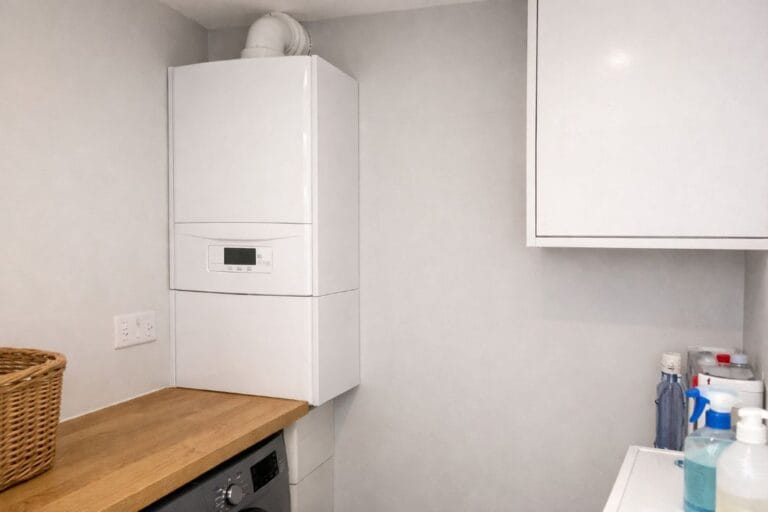
Flats can be especially awkward if the boiler sits in a kitchen cupboard, above a worktop, or near shared service routes. Terraced houses bring a different challenge, because older layouts may hide previous alterations behind walls, floors, or boxed-in pipework.
Planning reduces friction. Clearing the work area, checking building access in advance, and understanding the likely installation timeline can make the process feel more orderly. In a busier refurbishment setting, project management matters because boiler replacement often has to be coordinated with plastering, joinery, electrical work, or new kitchen installation.
Homeowners usually cope best when they expect a short period of inconvenience rather than hoping for none. That mindset suits London property work generally, where practical limits are part of the job.
Making the Decision: Repair or Replace? A Structured Approach
Good decisions usually come from weighing several factors together. Safety, age, reliability, cost, and efficiency all deserve a place in the assessment.
Use this simple framework:
- Check safety first. Any concern raised by a Gas Safe Register engineer should move to the top of the decision.
- Look at repair history. One fault is different from repeated callouts over a season.
- Consider the boiler age alongside maintenance history. Older boilers with poor servicing records carry more risk than older boilers that have been looked after.
- Review parts availability. If replacement components are hard to source, future repairs may become slower and more expensive.
- Compare likely short-term repair spend with the value of a new installation, including warranty coverage and improved reliability.
- Factor in efficiency and comfort. If the current system struggles to heat the home properly, replacement may solve more than the immediate fault.
- Ask for a second opinion if the diagnosis is unclear or the recommended work feels disproportionate.
Professional heating engineers can help with this assessment, but the final decision still rests on household priorities. Some owners accept a reasonable repair if they are planning wider works soon. Others prefer replacement sooner because predictable heating matters more than squeezing extra life from an old appliance.
What matters most is avoiding a narrow decision based on one invoice alone. A boiler assessment works better when it reflects the home, the pattern of faults, and the likely condition of the wider system.
Beyond the Boiler: Rethinking Home Heating for the Long Term
A boiler replacement can be a useful moment to look at the bigger picture. Homes across London often have heating systems that grew in stages, with new radiators here, older controls there, and insulation that never quite caught up.
That is why a simple boiler swap does not always deliver the full improvement people expect. Heating performance also depends on controls, zoning, radiator balance, pipework condition, and the building envelope itself.
Useful upgrades may include:
- smart thermostats and better heating controls
- zoning for different floors or rooms
- radiator improvements where output no longer suits the space
- insulation work that reduces heat loss
- system checks to confirm compatibility between boiler, controls, and emitters
An Energy Performance Certificate can offer helpful context, although it should be read as one piece of the picture rather than the whole answer. Future standards are likely to keep pushing homes toward better efficiency, so it is worth thinking beyond the immediate fault and considering how the property will perform over the next several years.
For many London homeowners, the smartest decision is the one that treats the boiler as part of a wider home heating strategy. That usually leads to better comfort, fewer interruptions, and a system that suits the property more naturally.