
How can you make the most of a small kitchen without knocking down walls?
A small kitchen often feels limiting. But the real challenge is usually how the space is used, not its size. By rethinking layout, improving storage access, and calming the visual environment, even the most compact kitchens can feel easier to use.
Pro Tip: Avoid buying more storage until you understand how well your current layout works.
Petru Balbaie - Director at Compact Building Ltd
Why small kitchens feel harder to use than they should
If you’ve bumped your elbow reaching into a cupboard or struggled to find a clear spot on the worktop, you’re not alone. In many UK homes, kitchens feel frustrating. Often, this is not due to size, but to how poorly they’re set up for everyday life. This is particularly common in older UK housing stock, where kitchen design has not always kept up with changing needs.
Having space and being able to use it comfortably are not the same. Poor layouts, awkward storage, and cluttered surfaces turn simple tasks into daily irritations. Many kitchens have not been updated to suit modern life, leaving people to work around problems instead of solving them.
Rather than focus on floor area, think about how your kitchen supports cooking, cleaning, and movement. When it feels cramped, the real issue may be organisation and access. That is often the root of small kitchen problems.
Where space is actually being lost in small kitchens
At first glance, many kitchens look like they have enough storage. But once in use, it becomes clear where space gets wasted.
Corners often hold items that are rarely used. Deep cupboards become hiding spots for things you cannot reach or see. Shelves placed too high or low make everyday access awkward.
Cupboards that are difficult to use are not helpful, even if they’re plentiful. Look for spaces you tend to avoid or struggle with. These are likely where kitchen space is being wasted. These kinds of inefficiencies are typical in cramped kitchen setups.
Rethinking storage so everything is easier to reach
Instead of adding more storage, ask whether your current storage is easy to use. When access and visibility improve, everyday tasks become less frustrating.
Drawers are usually easier to manage than cupboards, especially near the floor. Pull-outs and organisers reduce clutter. Keep regularly used items within easy reach, not behind seasonal or rarely used equipment.
When your storage supports how you move, things run more smoothly. These small kitchen storage ideas can improve flow and reduce effort.
How to use vertical and overlooked space properly
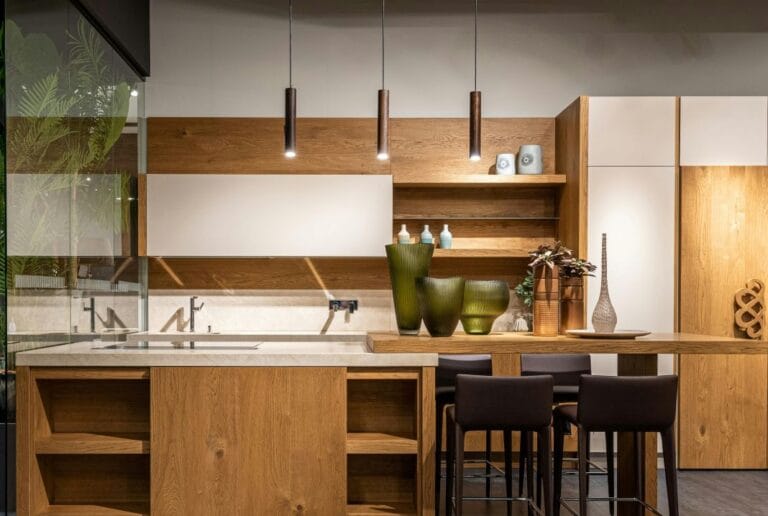
Unused walls and gaps can often serve a purpose. But to use vertical space well, you need to plan carefully.
Tall cabinets work if they are balanced with the room. Too many can feel overpowering. Wall rails or a single shelf might be better in some areas, especially for things used often.
Overhead storage is useful for items you rarely use, but stacking too much creates visual clutter. When vertical kitchen storage is thoughtfully designed, it makes a noticeable difference in compact kitchens.
Designing the layout around how you actually cook
Layout has more impact than size. A smart setup reduces effort and supports your daily tasks.
Rather than rely only on the work triangle, pay attention to how you move in the kitchen. Where do you prep? Is anything constantly in the way? Do you walk back and forth more than you need to?
The position of appliances, doors, and cupboards matters. One Compact Building client reorganised their zones without changing the kitchen’s shape, and the difference was immediate. A layout that fits your routine makes everything simpler. Applying efficient kitchen layout thinking based on real-world habits often improves flow more than additional space ever could.
Reducing visual clutter to make a kitchen feel bigger
How a kitchen looks affects how big it feels. Too many colours, too much on show, or poor lighting can make it feel smaller than it is.
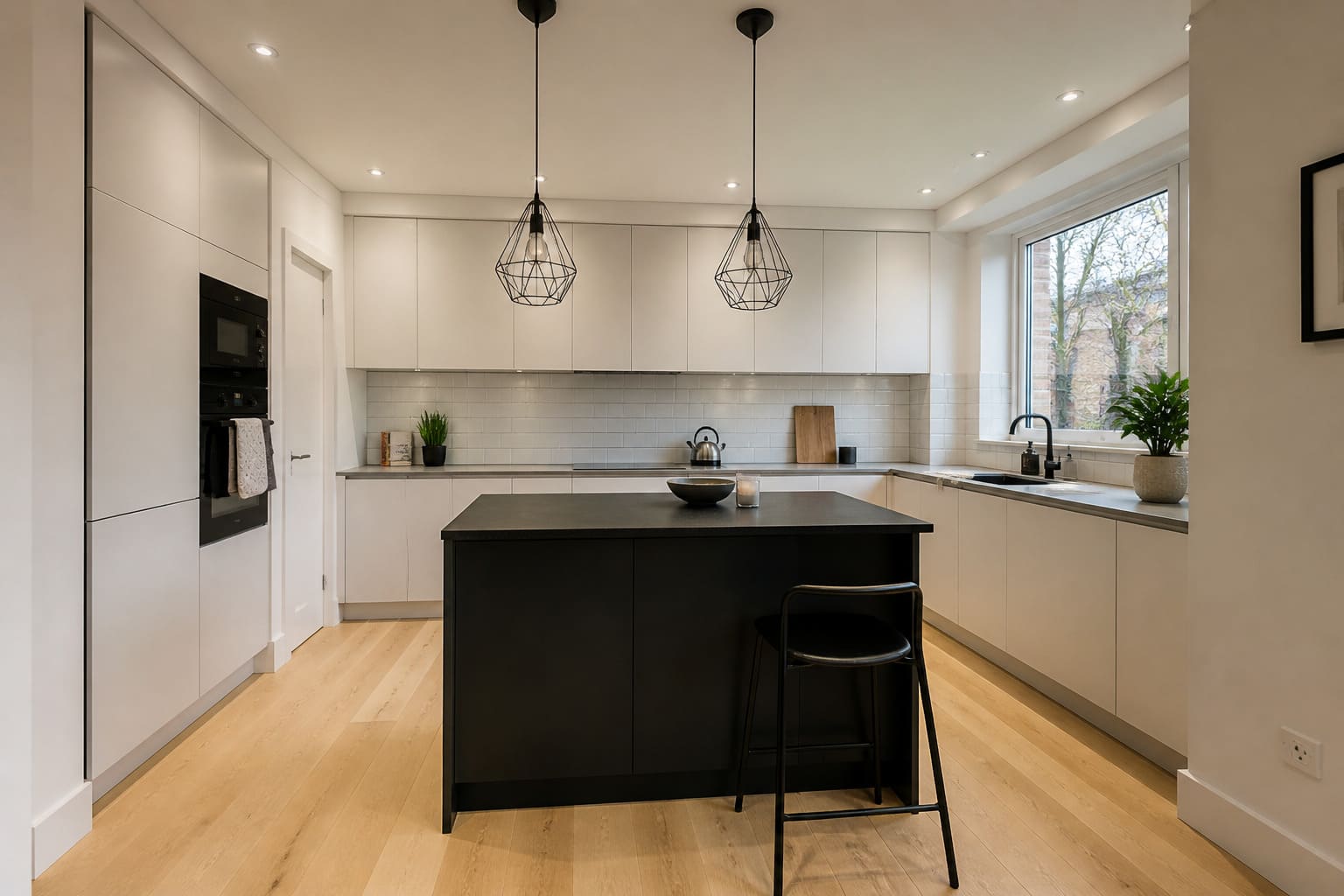
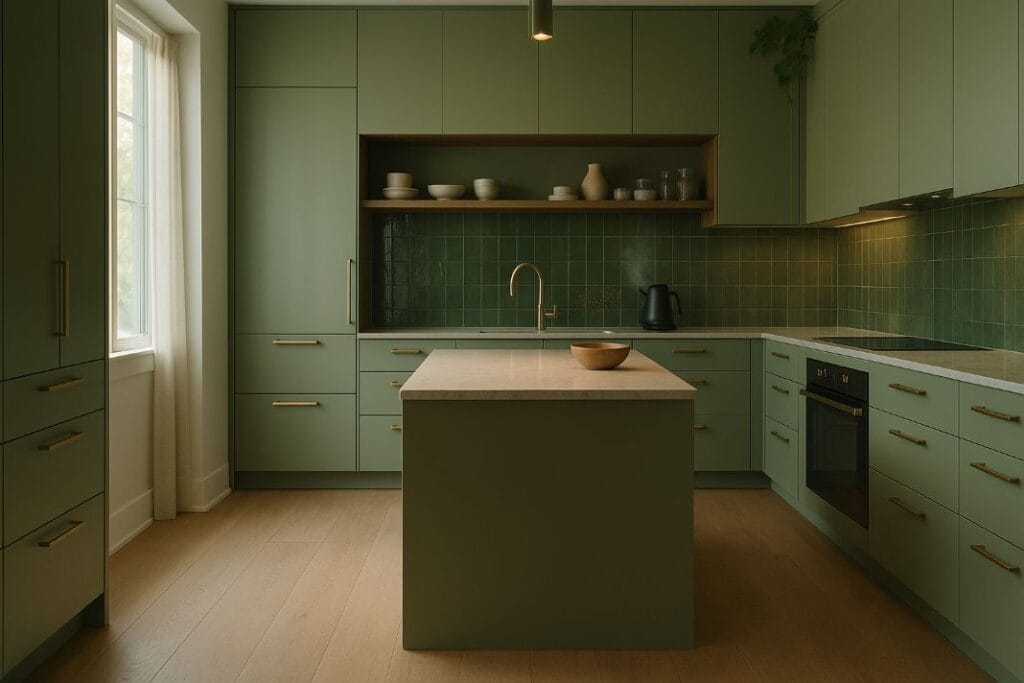
Clear worktops and matching finishes help create calm. Closed storage usually works better than open shelves in small kitchens. Good lighting, especially in darker areas, makes the room feel more open and welcoming.
When the kitchen looks calm, it feels calm. Reducing visual clutter helps you focus and enjoy the space. It is one of the easiest ways to make a small kitchen feel bigger. These results come from simple kitchen design principles that focus on function and comfort.
Small upgrades that make a noticeable difference
Big changes are not always necessary. Some quick upgrades make a lasting difference.
Use internal organisers to keep cupboards tidy. Switch out large appliances for slimline models. Add lighting under cabinets or inside drawers to improve visibility.
Compact kitchen upgrades like these add function without much disruption. They support your daily habits and free up valuable space.
Pro Tip: Always prioritise easy access over storage volume when planning small kitchen improvements.
Petru Balbaie - Director at Compact Building Ltd
Need More Usable Storage?
Understanding lighting types and where to use them
Lighting does more than help you see. It changes how the space feels. Use three types:
- Task lighting under cupboards for food prep.
- Ambient lighting from ceiling fixtures for general brightness.
- Accent lighting in display cabinets or over cupboards for warmth.
Using all three gives your kitchen visibility, comfort, and better function.
Common myths about small kitchens
Not all popular advice works in real homes. Here are a few common small kitchen myths:
- “Open shelving makes kitchens feel bigger.” It can, but often creates clutter. Closed storage is usually more effective.
- “More units mean more storage.” Not if they’re hard to access. It is better to focus on usable space.
- “White kitchens always look larger.” Light colours help, but layout and lighting make more difference.
Troubleshooting checklist: what to check before making changes
- Can you reach daily items without stretching or crouching?
- Do any drawers or doors get in the way of one another?
- Are there deep cupboards where items get lost?
- Is there enough light above your prep and sink areas?
- Are the walls being used for storage or sitting empty?
- Do frequently used items have a logical, easy-to-reach place?
Use this checklist to spot your kitchen’s problem areas.
How to decide what to change first without overhauling everything
Planning everything at once can be overwhelming. Start by fixing what slows you down most.
Watch how you work in the kitchen. What feels awkward? What tasks take longer than they should? List the problems and sort them by impact and ease of solving.
Focus first on layout and access. Compact Building often advises clients to tackle practical fixes before making style updates. A more usable kitchen often comes from small improvements done in the right order.
Quick answers to common small kitchen questions
What’s the best layout for a narrow kitchen?
Use a galley layout. Keep high-use items within reach and avoid blocking the walkway.
Should I choose open shelving or closed cupboards?
Closed cupboards are better for keeping things tidy and reducing visual clutter.
Is it worth switching to slimline appliances?
Yes. Slimline models save space and work well in smaller kitchens.
Can lighting really make the kitchen feel bigger?
Yes. Good lighting improves how the kitchen looks and makes it easier to use.
How do I know if I need a full renovation?
If your kitchen still feels awkward after small changes, a bigger update might help. But many problems can be fixed without major work.