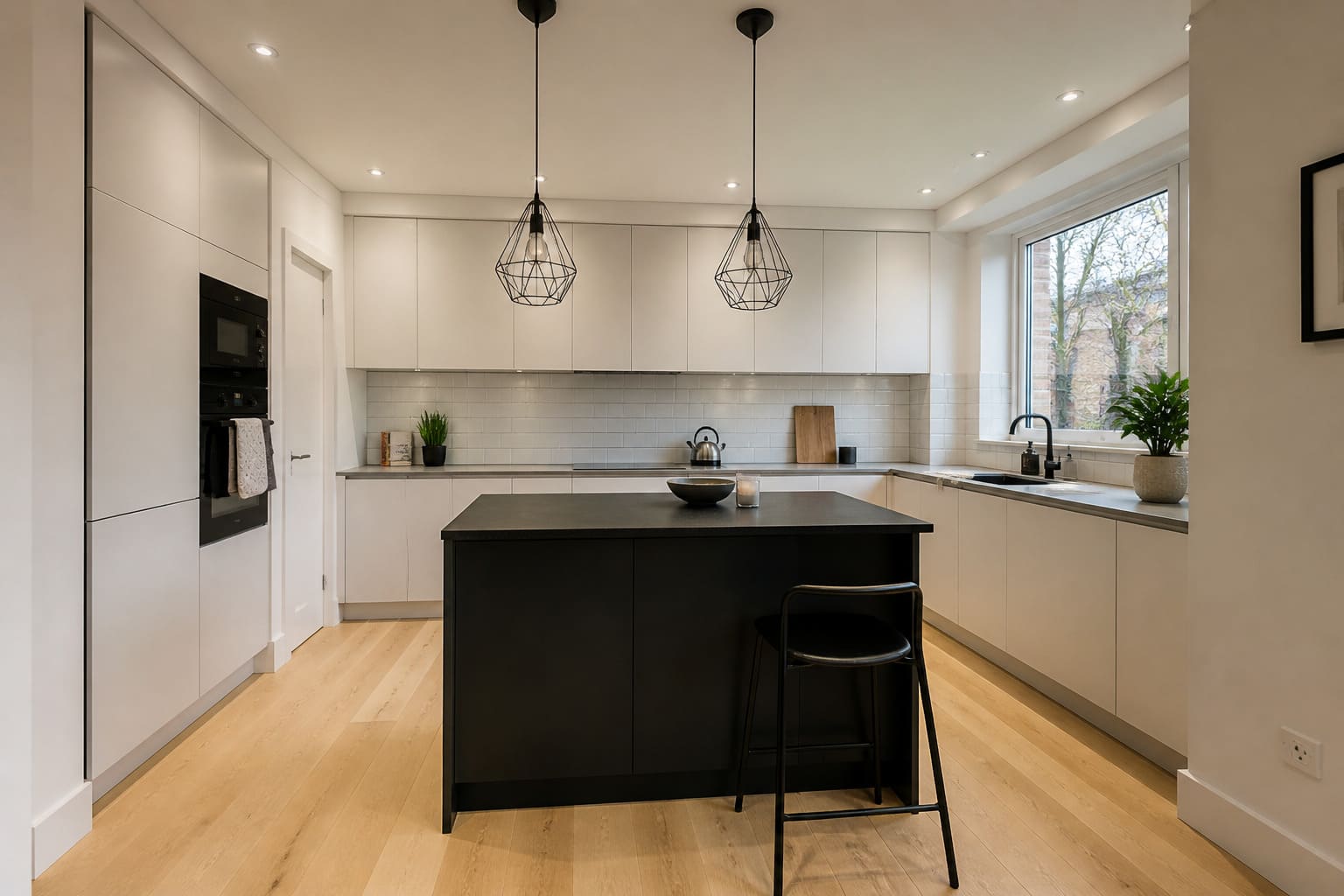



A kitchen renovation involves structural work if the plans affect the building’s stability or load path, such as removing a load-bearing wall, altering a chimney breast, changing floor levels, or inserting support beams. In London homes, especially period terraces, flats, and older properties with previous alterations, early checks from the right professionals can clarify what is cosmetic and what affects the building structure before costs and timings drift.
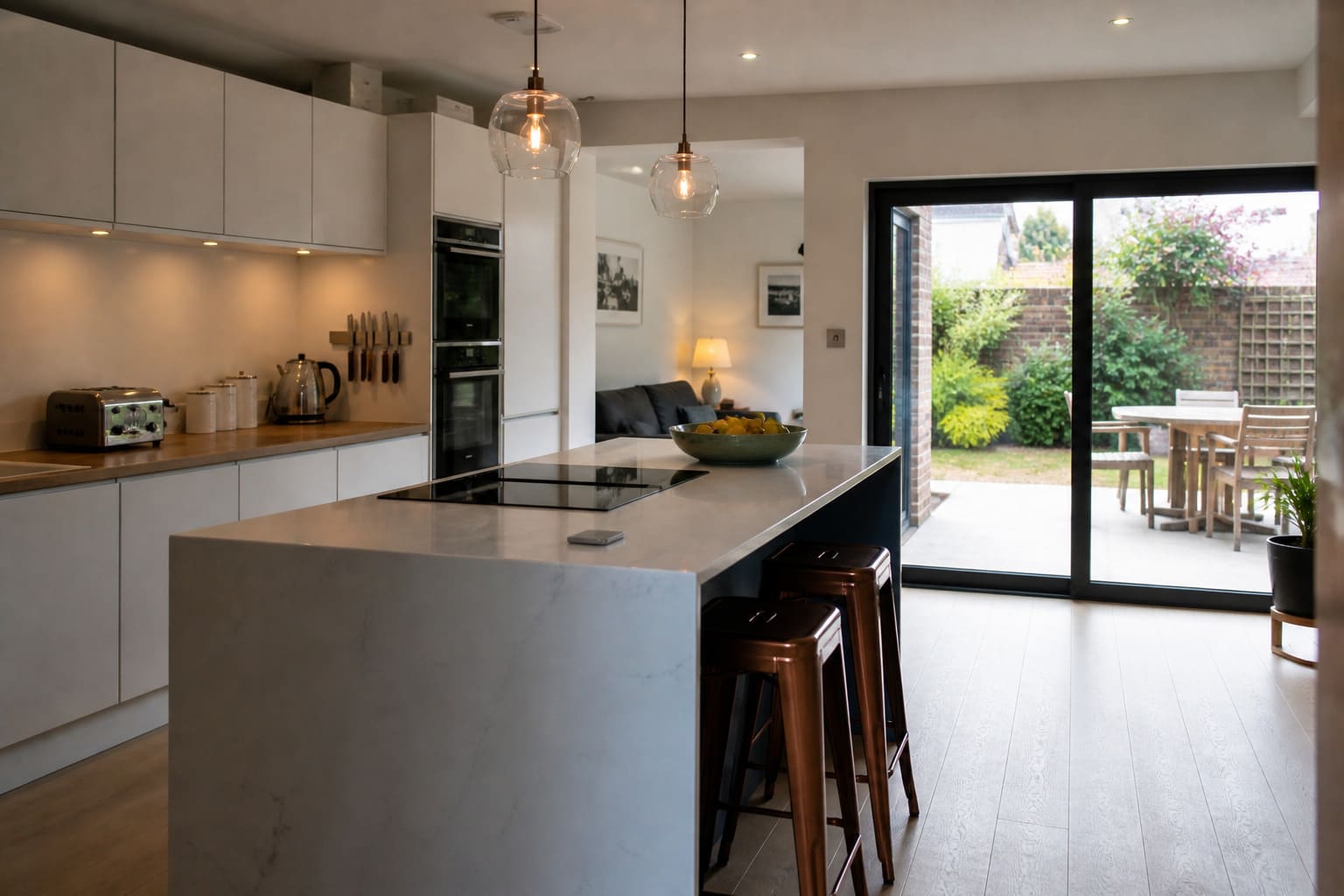
Understanding structural work in kitchen renovations
Structural work means changes that affect how the property stands and carries weight. Cosmetic updates, by contrast, cover items such as new cabinets, worktops, tiles, lighting, and appliances, even if the room looks completely different once the work is done.
A simple way to separate the two is to look at whether the renovation alters the building fabric or supporting elements.
- Structural changes usually include removing supporting walls, widening openings, changing the kitchen layout in a way that affects the building structure, altering a chimney breast, strengthening floors, or adding steel or timber support beams.
- Non-structural changes usually include replacing units, moving appliances within the same service zones, updating finishes, fitting new flooring, or redecorating.
Confusion often starts with layout changes. A homeowner may assume that opening a kitchen into a dining room is a straightforward knock-through, yet the wall between those rooms may be load-bearing. In a London terrace, that is common. In a flat, the issue may be different, with floor loading, shared structure, or freeholder requirements coming into play.
Property age matters as well. Older homes can hide previous alterations, patch repairs, or uneven construction methods that are not obvious from the surface. One kitchen may sit in a house that has already been altered over decades, which means that what looks like a minor adjustment can trigger input from structural engineers, Building Regulations approval, and, in some cases, matters linked to the Party Wall Act or local planning authorities.
Signs your kitchen renovation may require structural work
Plans for a larger, lighter, more open kitchen often point toward a structural assessment before design choices are finalised. The desire itself is not the issue. The underlying building may be.
Look out for these signs during early planning:
- You want to remove a wall between the kitchen and another room.
- You are considering an open-plan conversion in a terrace or semi-detached house.
- A chimney breast affects the layout and you want to alter or remove part of it.
- Floors feel uneven, bouncy, or visibly sloped.
- Cracks appear around door frames, ceilings, or wall junctions.
- The property has a history of extensions or internal alterations.
- You are renovating a flat where structural changes may affect shared parts of the building.
- Services such as plumbing or drainage appear to run through walls you intend to change.
Visible clues do not always tell the full story. A wall can sound hollow in one spot and still connect to a structural element elsewhere. Equally, a room that looks perfectly sound can conceal older steelwork, poorly supported openings, or hidden damage from leaks.
Neighbour comparisons can also mislead. A similar house on the same street may have a different history of alterations, repairs, or settlement. Two Victorian terraces may look identical from outside, yet one may need floor levelling and structural support where the other does not.
At that stage, a property survey or renovation inspection can be useful, especially where concerns already exist. Chartered surveyors, including RICS professionals, and structural engineers can identify whether your plans require further design input or building control involvement before work begins. That early view often matters more than any guess based on floorplans alone.

RSJs, wall removals, underpinning and load-bearing alterations handled by experienced builders.
Request a QuoteHow structural work impacts kitchen renovation costs
Structural work changes the cost picture because it adds design, compliance, labour, and risk management to the renovation budget. Fitting a new kitchen is one layer of work. Changing the structure underneath it is another.
The cost tends to build through several components:
- Structural engineer fees for calculations and drawings
- Additional labour for demolition, temporary support, and installation of beams or lintels
- Materials linked to the structural intervention, including steel, timber, fixings, and fire protection where required
- Building Regulations applications, inspections, and related fees
- Making good after the structural element is complete, such as plastering, flooring repairs, ceilings, and decoration
Scale matters. Creating a wider opening in a non-supporting partition sits in a very different category from removing a load-bearing wall and installing support across a broader span. The second option can also affect electrics, plumbing, heating, flooring continuity, and ceiling finishes on both sides of the former wall.
Unforeseen issues are another reason budgets move. Opening up a wall can reveal old pipework, redundant flues, poor previous workmanship, or joists that need extra support. In London properties, hidden irregularities are common enough that a sensible contingency is part of sound planning, not a sign that something has gone wrong.
Transparent quoting becomes especially important here. Firms such as Compact Building Ltd often stress the value of clear scope, professional input, and realistic allowances because a structural work cost is rarely just the beam itself. The surrounding repairs, approvals, sequencing, and coordination shape the total just as much as the main intervention.
Before committing to major layout changes, schedule a professional survey to avoid costly surprises during your renovation.
Working through permissions, regulations, and professional input
Compliance matters from the start because structural work is not simply a design choice. Once the renovation affects supporting elements, legal and technical checks usually follow.
Building Regulations approval is commonly needed where walls are removed, openings are widened, or structural members are inserted. Building Control will usually want to see suitable calculations and inspect the work at the right stages. That process exists to confirm that the finished structure is safe and properly supported.
Planning permission is a separate question. Internal alterations often do not need it, although exceptions can apply. Flats, listed buildings, and homes in conservation areas need more careful review, and external changes linked to a kitchen extension are more likely to involve local planning departments.
Shared walls add another layer. In terraced and semi-detached homes, the Party Wall Act can become relevant if the work affects a party wall, a shared boundary structure, or nearby excavation. The formal notice process can take time, so it needs attention early rather than after a build date is pencilled in.
Professional input usually comes from a mix of roles. Structural engineers calculate the support required. Architects or architectural designers may prepare layout and technical drawings. Building Control checks compliance. Project managers coordinate timing so that demolition, temporary support, steel installation, services, and finishing work happen in the right order. Without that coordination, even a well-designed scheme can become awkward on site.
Discuss your renovation plans with neighbours early if party wall issues are possible to help prevent project delays.
Weighing the value: when structural work is worthwhile
Structural work can be worthwhile when it changes how the kitchen functions day to day, not simply how it photographs. A better route through the ground floor, room for proper dining, more natural light, and improved storage can all justify the added challenge if they solve long-standing layout problems.
The strongest case usually comes from a combination of lifestyle value and property value.
- Good reasons often include poor room flow, cramped cooking areas, blocked light, unusable corners, or a layout that limits family life and entertaining.
- Weaker reasons often include copying a trend that does not suit the property, forcing open-plan living into a home that needs separate spaces, or spending heavily without addressing the main constraints.
Market value is harder to pin down with certainty because outcomes vary by street, specification, and buyer expectations. Even so, estate agents, property valuers, and RICS professionals often look closely at layout quality in London homes, especially where ground-floor space is limited. A thoughtful opening between kitchen and dining space may improve daily use and saleability. By contrast, expensive structural changes that create an awkward or overexposed layout may add less than expected.
Cosmetic work still has its place. If the kitchen already functions well, better cabinetry, improved lighting, and stronger materials may offer a more sensible return than major kitchen wall removal. In a home with a genuinely compromised layout, though, surface upgrades can feel disappointing once the novelty wears off and the underlying problem remains.
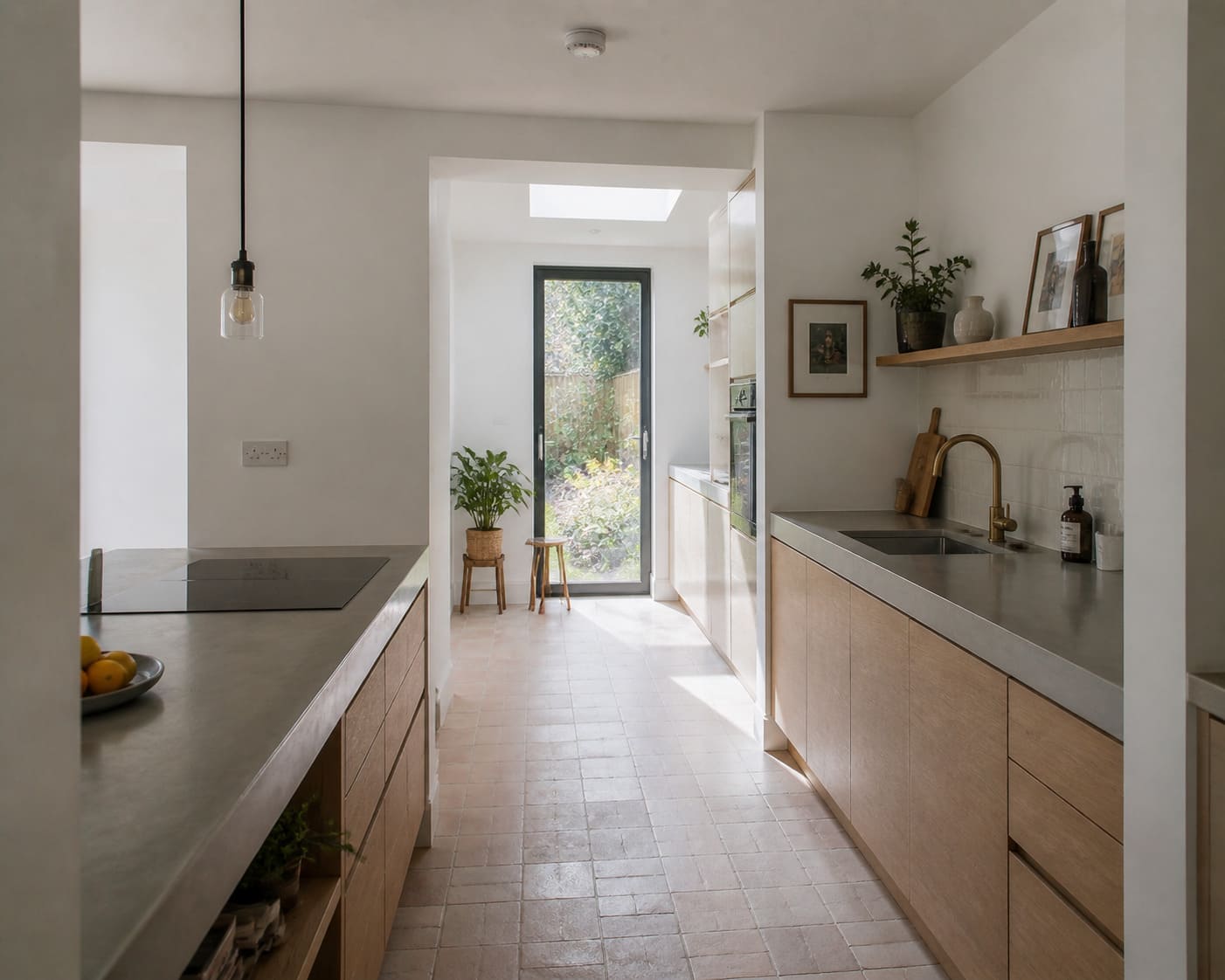
The London factor: unique challenges and considerations
Kitchen structural work in London carries its own set of pressures because the housing stock, site conditions, and approval routes are rarely straightforward. Even modest projects can involve practical constraints that shape cost and timing.
Period terraces often hide the biggest surprises. Chimney breasts, old joists, uneven floors, and previous knock-throughs are common. A compact home renovation in one borough may also need a different level of documentation from a similar property elsewhere because London borough councils do not all operate in exactly the same way.
Access can be just as influential as the structural design. Materials may need to pass through narrow hallways, across side returns, or through homes with limited storage space and no easy parking nearby. Waste removal, delivery timing, and neighbour disruption therefore become part of project sequencing, especially in dense residential streets.
Flats add another layer of challenge. Freeholder consent, lease restrictions, acoustic concerns, and shared structural elements can all affect what is possible. A listed building raises further questions around consent and acceptable methods, even where the desired change appears entirely internal.
Neighbour relations matter in practical terms as well as legal ones. Party wall London issues can slow a project if they are left too late, and noisy structural work in close quarters rarely stays unnoticed. Experience with these urban renovation challenges tends to show in planning quality, communication, and site organisation. Compact Building Ltd, for example, operates in a market where that kind of coordination is part of ordinary project control rather than an extra.
We manage structural calculations, building control sign-off, and the build itself.
Speak to UsLooking ahead: rethinking structural work as an investment, not a gamble
Structural work often sounds risky because it sits behind the walls, under the floors, and outside the parts of a renovation people picture first. Yet the process becomes far more manageable once the unknowns are turned into drawings, calculations, approvals, and a sensible sequence of work.
A kitchen renovation that changes the structure asks for more preparation, stronger oversight, and a fuller budget than a cosmetic refit. In return, it can solve the kind of layout problems that surface upgrades never quite fix. Where project managers, structural engineers, and planning authorities are involved at the right time, the decision tends to feel less like a leap and more like a measured commitment to a better-functioning home.