

What are the best ways to design a small kitchen without compromising function?
You don’t need loads of space to make your kitchen work. With the right layout, clever storage, and practical choices, even the most compact kitchens can feel easy to use and enjoyable to be in. At Compact Building, we often help clients reimagine smaller spaces with thoughtful renovations that prioritise both function and flow.
Pro Tip: Measure twice before buying fold out furniture to ensure it doesn’t block walkways.
Petru Balbaie - Director at Compact Building Ltd
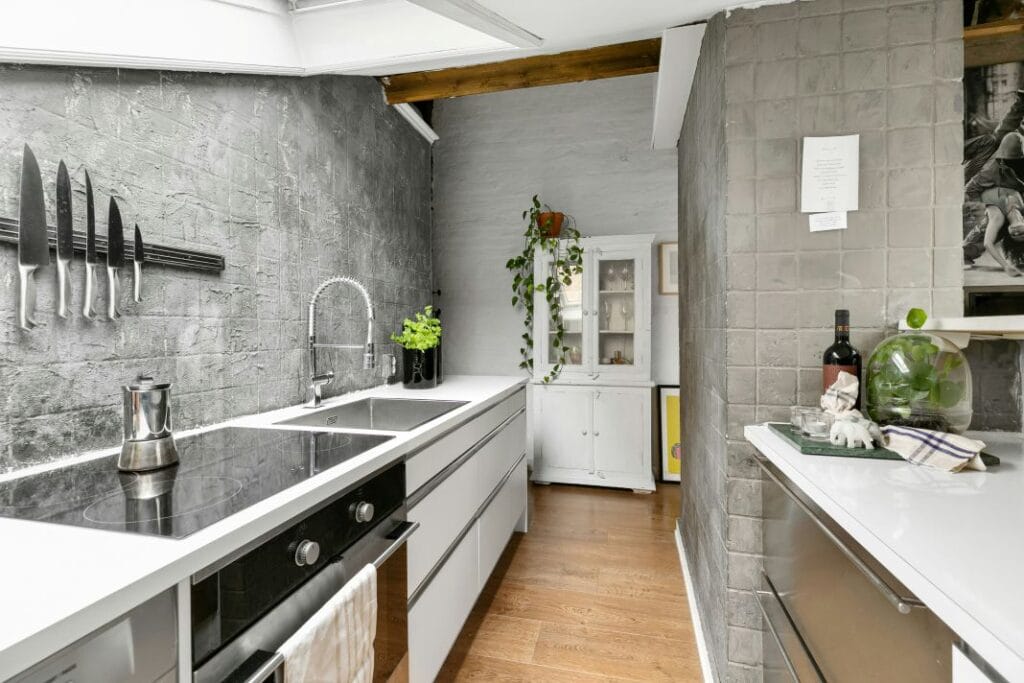
1. Use a Galley Layout to Maximise Narrow Kitchens
A galley layout uses two counters facing each other with a walkway in between. It’s a smart way to make use of a long, narrow room.
It works especially well in basements or slim flats where floor space is tight. To keep movement comfortable, aim for at least 1 metre of space between the counters this follows UK Building Regulations Part M.
Galley layouts are best for kitchens without many doors cutting across the space. If there are too many openings, it can disrupt the flow.
Mistake to Avoid: Forgetting to measure door swings cupboards and appliances need room to open properly.
2. Choose Slimline Appliances That Still Deliver
You don’t need full size appliances to get the job done. Slimline dishwashers around 45cm wide, narrow fridges, and integrated washer dryers all do the trick.
Some brands like Bosch Compact and Beko make appliances just for small kitchens in the UK. Many models are energy efficient and use less power.
Renter Tip: Freestanding slim appliances are handy if your landlord doesn’t allow fitted units.
3. Add Vertical Storage Right Up to the Ceiling
When floor space runs out, the walls are your next best option. Tall cupboards and shelves that go up to the ceiling are perfect for squeezing in extra storage.
Store less used items higher up and keep daily use items within reach. Consider narrow pull out storage or tall storage cabinets that make full use of vertical space. Ceiling mounted rails and modular shelving can offer even more flexibility.
British Standard Cupboards and IKEA UK offer a wide range of vertical storage options suitable for compact homes.
4. Create Multi Functional Zones with Fold Out Furniture
In small kitchens, furniture has to earn its place. A wall mounted table, a bench with hidden storage, or stools that stack away can make your kitchen more useful without taking up much room.
Renter Tip: Use fold out tables that mount with adhesive brackets if you can’t drill holes.
Need Help Designing Your Small Kitchen?
Pro Tip: Use vertical storage first before considering bulky base units in tight kitchens.
Petru Balbaie - Director at Compact Building Ltd
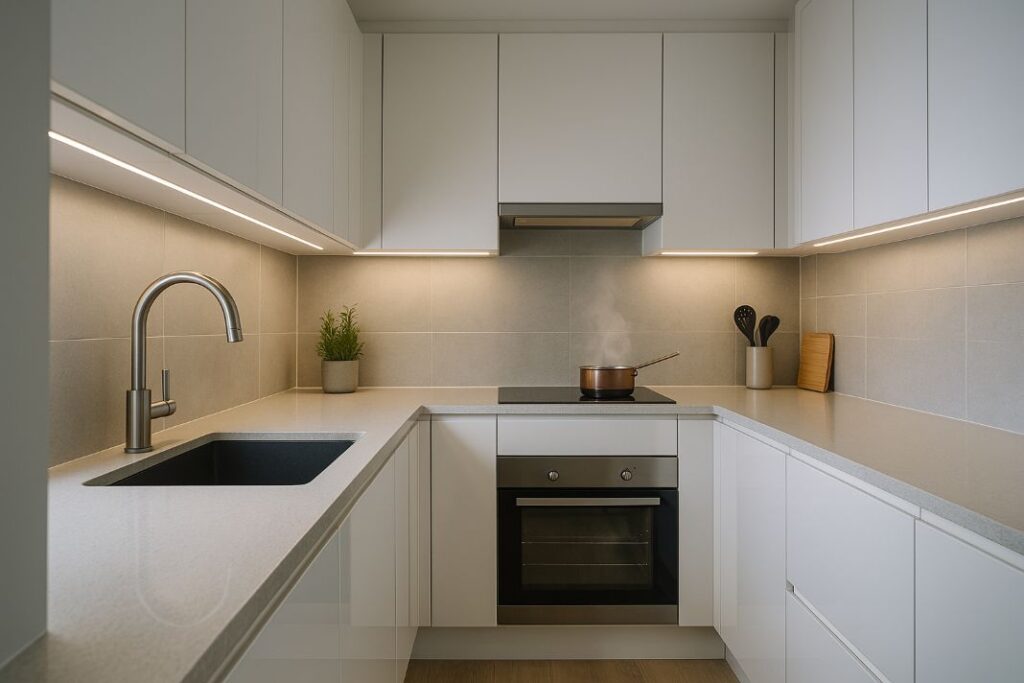
5. Use Light Colours and Reflective Surfaces to Expand the Feel
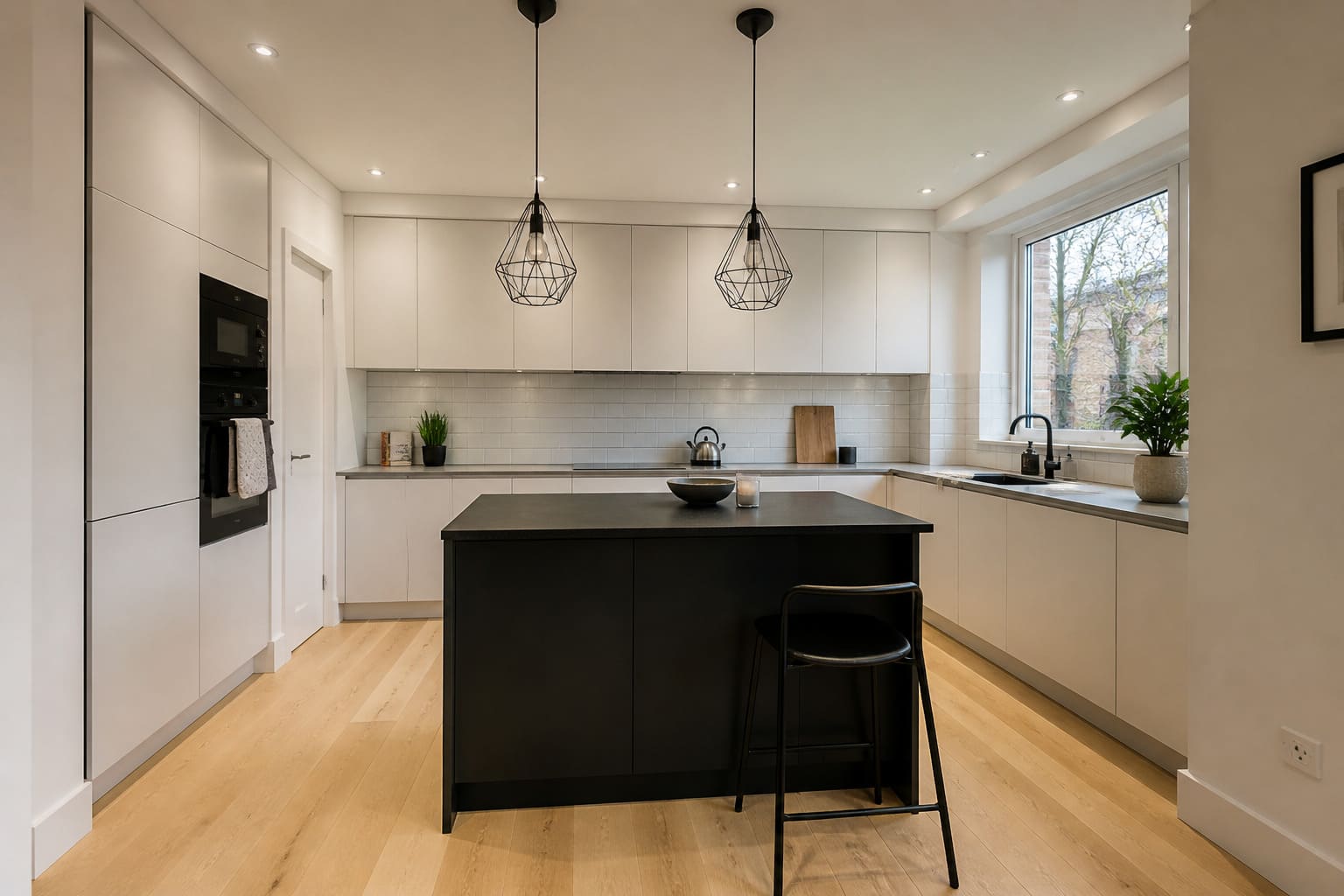
Light colours help reflect light and make your kitchen feel bigger. Glossy cabinets, pale tiles, and soft cool toned paints work well.
Stick with easy to clean finishes that keep the room bright and fresh. A mirrored splashback or gloss worktop can add extra depth. Space enhancing finishes like light toned wood or white gloss fronts are especially effective in narrow spaces. These visual space expansion techniques can make a big difference without structural changes.
6. Install a Pull Out Pantry or Narrow Slide Storage
There’s often a small gap next to the fridge or oven just wide enough for a pull out pantry.
Slide out towers as narrow as 20cm can hold jars, tins, or even up to 12 bottles. Kits start around £60 and are easy to fit. These hidden gems are perfect wasted space solutions.
Renter Tip: Use narrow trolleys on wheels that can sit beside the fridge without needing to be attached.
7. Zone with Lighting to Define Space Without Walls
In a compact kitchen, lighting does more than illuminate it helps shape how the space functions. By using a mix of task, ambient, and accent lighting, you can clearly define different zones without putting up walls. Task lighting, like LED strips under cabinets, makes food preparation safer and easier. Ambient lighting, such as ceiling mounted fixtures, provides general brightness for the entire room. Accent lighting, including small spotlights or pendants, draws attention to shelves or decorative areas and adds a warm, layered feel.
This three tier lighting strategy lets you create a flexible and inviting space. For renters, plug in pendant lights and battery powered LED strips offer quick solutions that don’t require electrical work. Using lighting in this way adds structure, improves visibility, and enhances the mood, making the kitchen feel larger and more considered.
8. Make Use of Dead Corners and Kickboard Drawers
In many kitchens, corners and kickboards the recessed area beneath your cabinets are spaces that often go unused. But with a bit of clever planning, they can become surprisingly effective storage zones.
Corner carousels and pull out fittings allow you to access pots, pans, and dry goods without losing items to the back of the cupboard. These rotating or extending systems are perfect for awkward spaces, making them not only more accessible but also much more practical.
Kickboard drawers, on the other hand, are ideal for slimmer items like baking trays, chopping boards, or even rarely used utensils. By transforming this otherwise wasted gap into usable storage, you can keep your worktops clear and your cabinets more organised.
At Compact Building, we’ve seen how thoughtful cabinetry upgrades like these can completely change how a kitchen functions especially in homes where every inch of space matters.
9. Switch to Open Shelving, But Only Where It Works
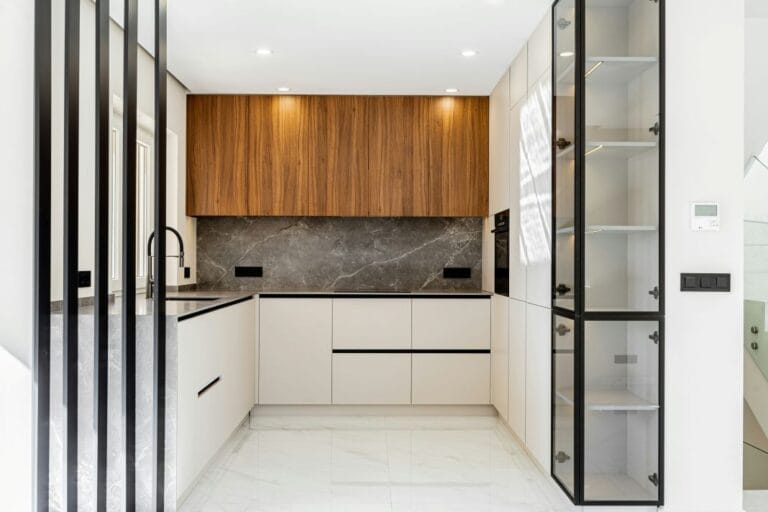
Open shelving can be a clever way to make a small kitchen feel more spacious, but it’s important to use it wisely. When placed thoughtfully, open shelves help lighten the visual weight of a kitchen and allow for attractive displays of crockery or jars. However, they work best in areas away from the hob or sink, where grease and moisture can quickly make upkeep difficult. Poor ventilation or a reluctance to clean shelves regularly can also make open shelving more trouble than it’s worth.
To get the look without sacrificing practicality, consider mixing open and closed storage. Use easy to clean materials such as coated wood or powder coated metal to keep maintenance low. For renters or those avoiding permanent fixes, freestanding ladder shelves or adhesive brackets can offer the same style without drilling. Used in the right way, open shelving can add both charm and function, but always think through its placement and upkeep needs before committing.
10. Build in Flexibility with Moveable Units on Wheels
Wheeled trolleys or prep carts give you more workspace when you need it and tuck away when you don’t. These moveable solutions are ideal portable prep stations that can adapt to different tasks throughout the day.
Look for units with locking wheels and solid tops. Some even double as extra dining surfaces or entertainment hubs. This type of adaptable furniture makes small kitchens more versatile, especially for renters or people who regularly host guests.
Renter Tip: Choose trolleys that fit under counters when not in use, or double as a drinks station if you entertain.